Adding Whimsy to my Fall Classes Because Why The Hell Not?
On functional syllabi, AI transparency, and creative challenges.
The Fall semester begins next week, so I thought I'd quickly share some of the new things I'm trying out in my classes. If you weren't aware, I'm a faculty at UMass Amherst in the Department of Chemical & Biomolecular Engineering. In the Fall semester, I teach two courses: Process Control, which revolves around the control of industrial chemical processes, and Green Chemical Engineering, a sustainability elective I designed myself which covers the Principles of Green Chemistry, Life Cycle Assessment, the sociopolitical dimensions of the fossil fuel transition, and more.
I firmly believe in the power of radical, liberating education that breaks down the student-teacher hierarchy, nurtures diverse approaches to problem solving, and promotes inclusivity. And while it sounds hokey, but I believe that this process begins on Day Zero of a course. That's why I put in immense effort before the semester even begins to make sure students feel seen and included.
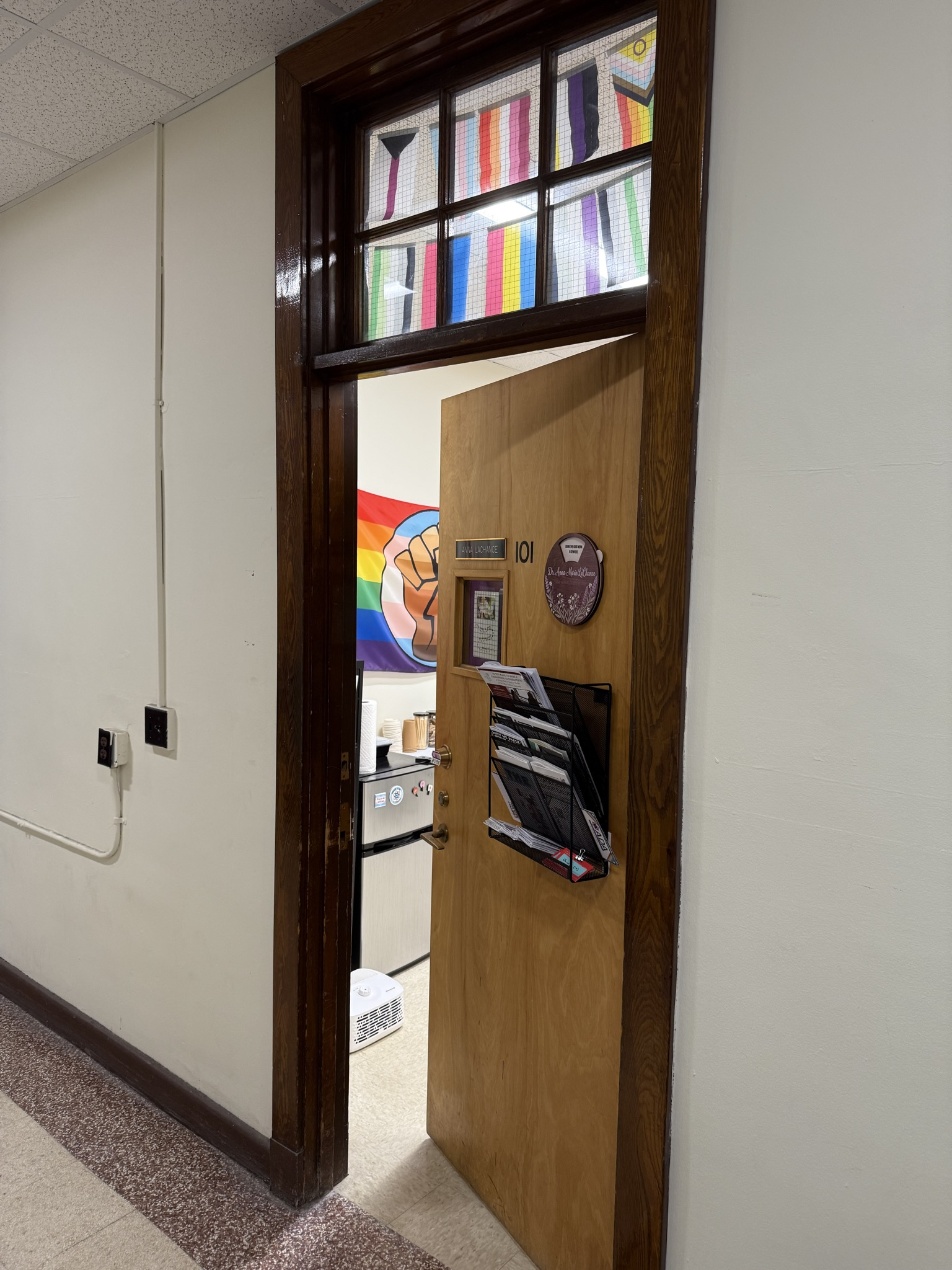
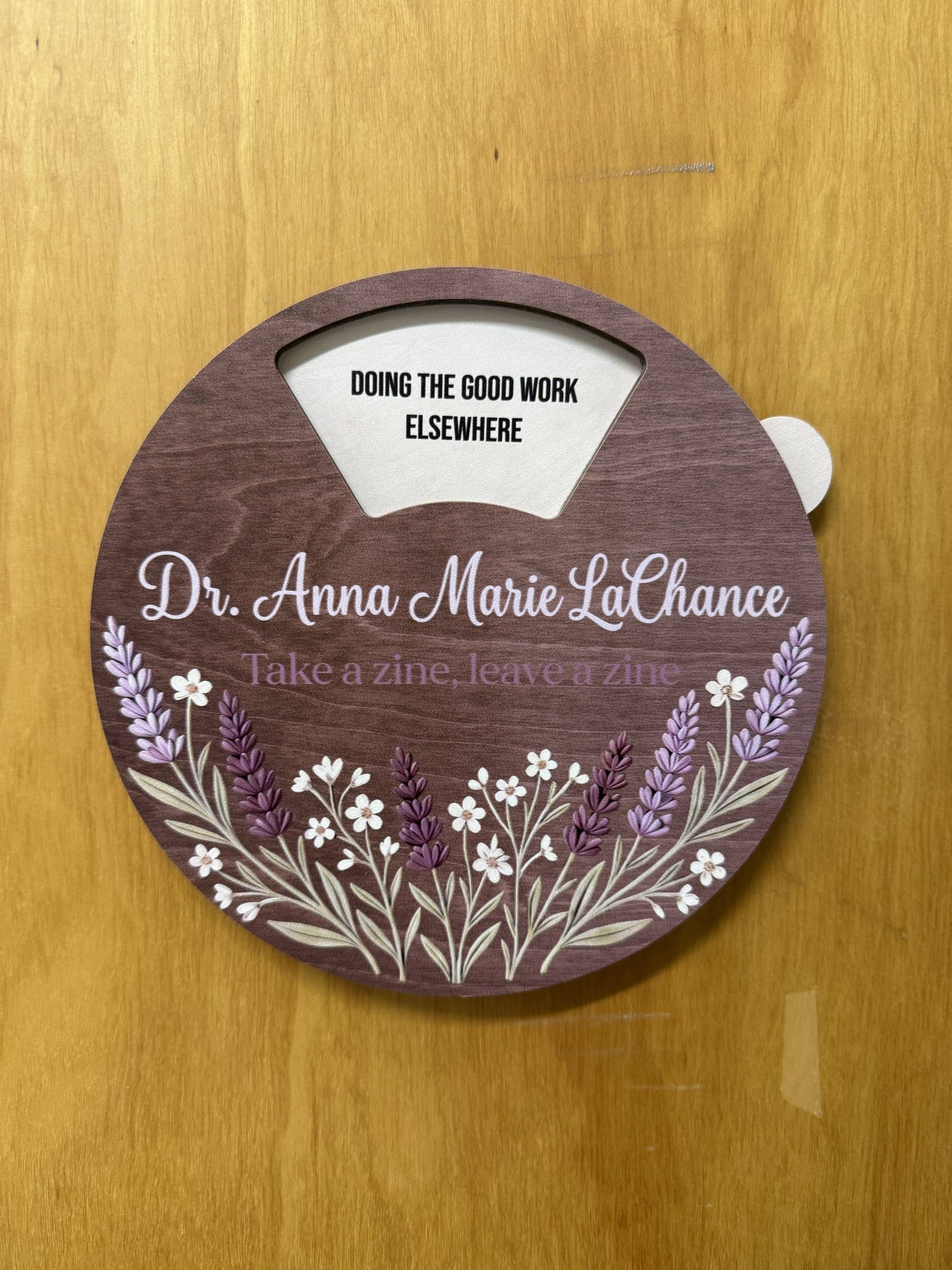
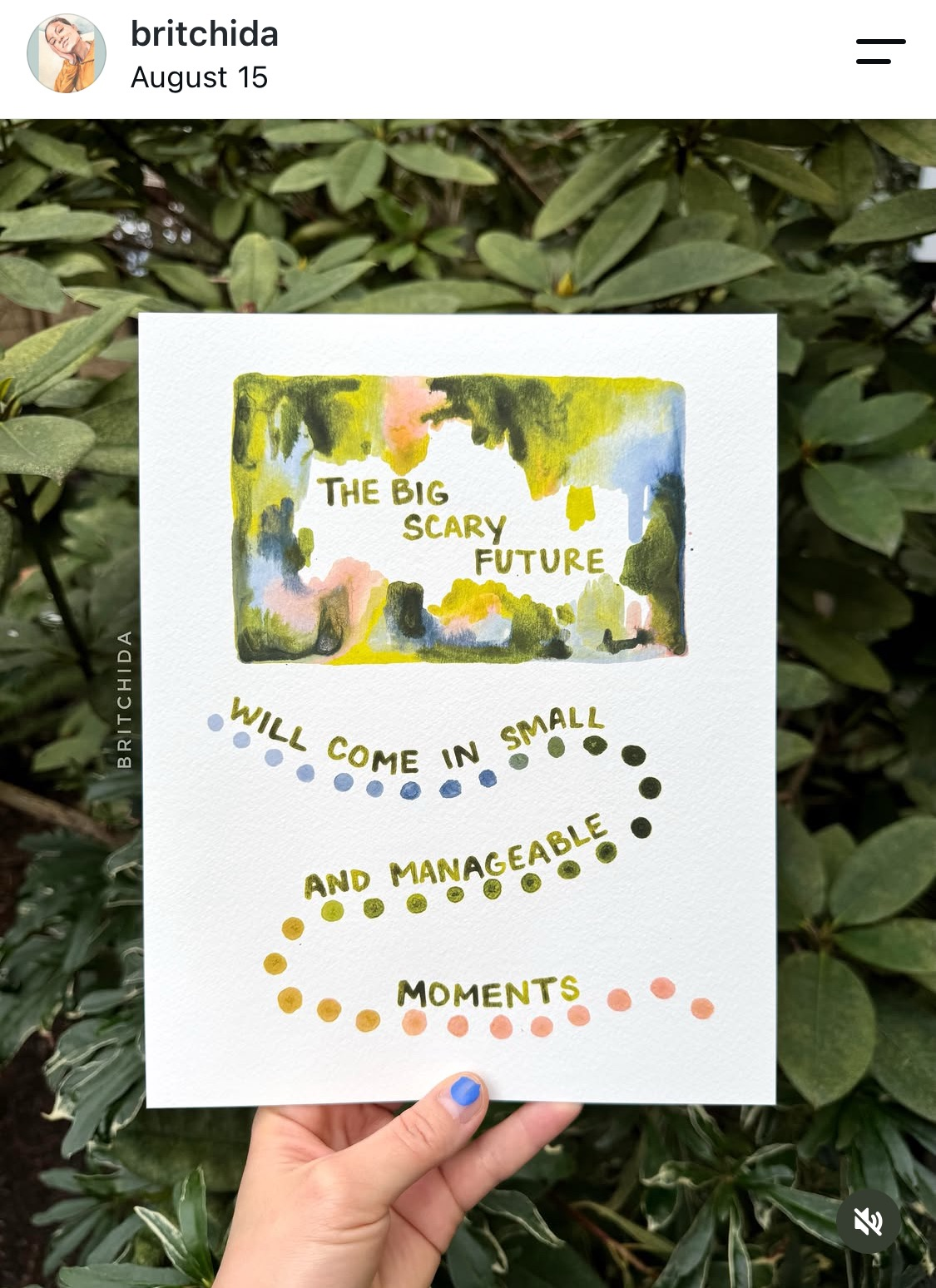
Part of this is with an elaborate pre-course survey that collects information on my students ranging from their technology needs, their comfort with skills from previous courses they've taken, their preferences for group work, and their current favorite music. Part of this is with a class playlist (made from the suggested songs) that I play at the start of class each day. Part of this is with an office door covered in zines, art (by Britchida in this case), and pride flags.
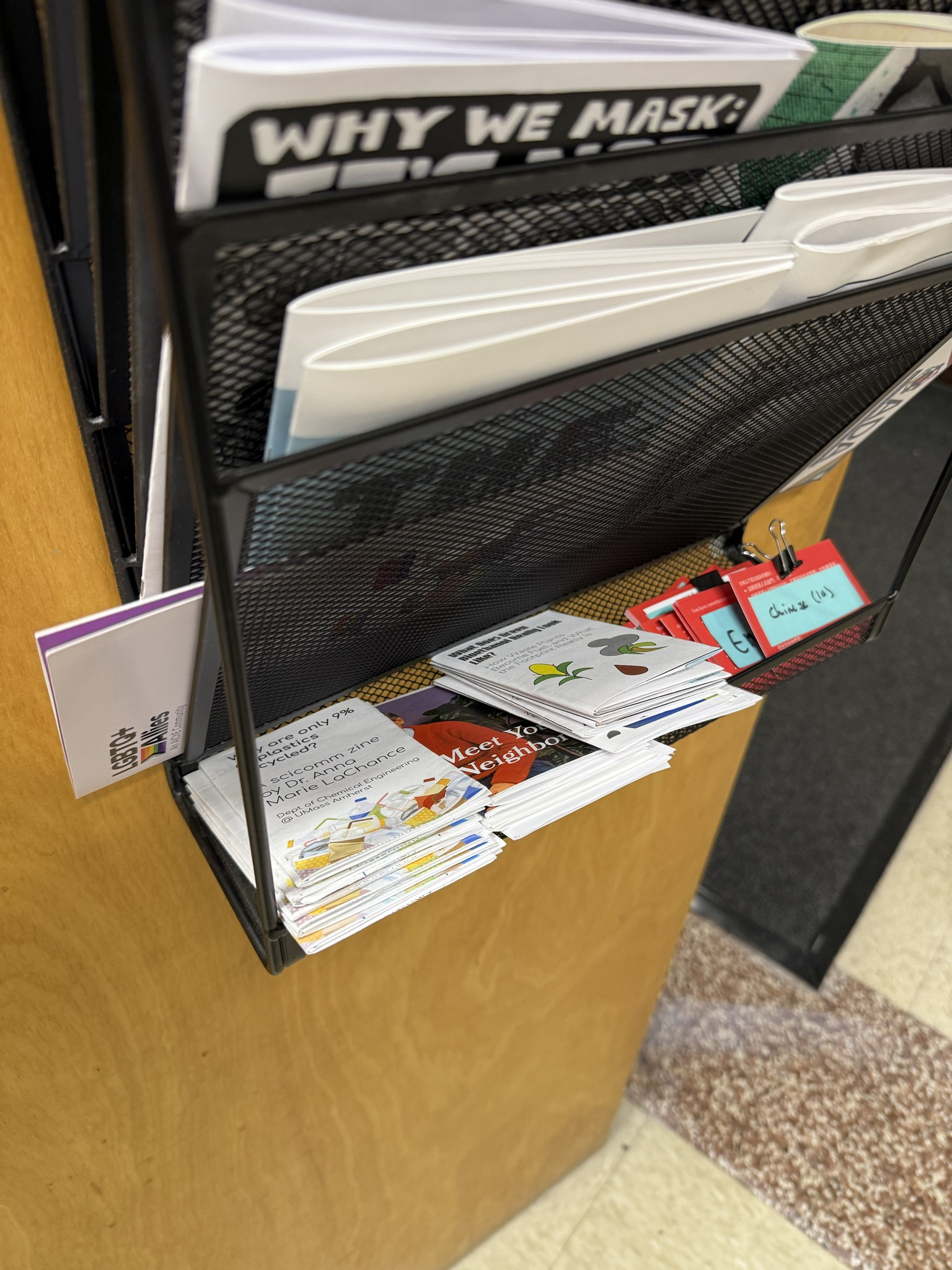
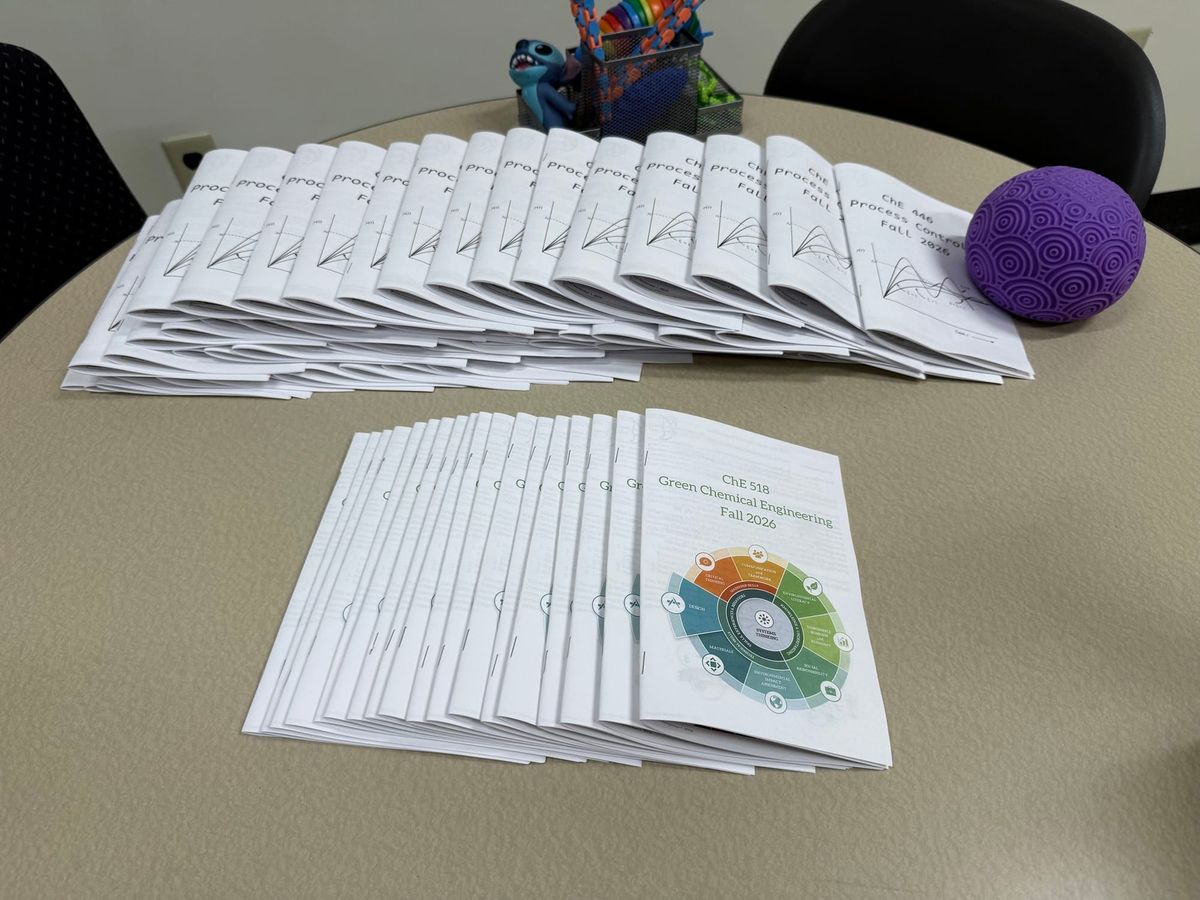
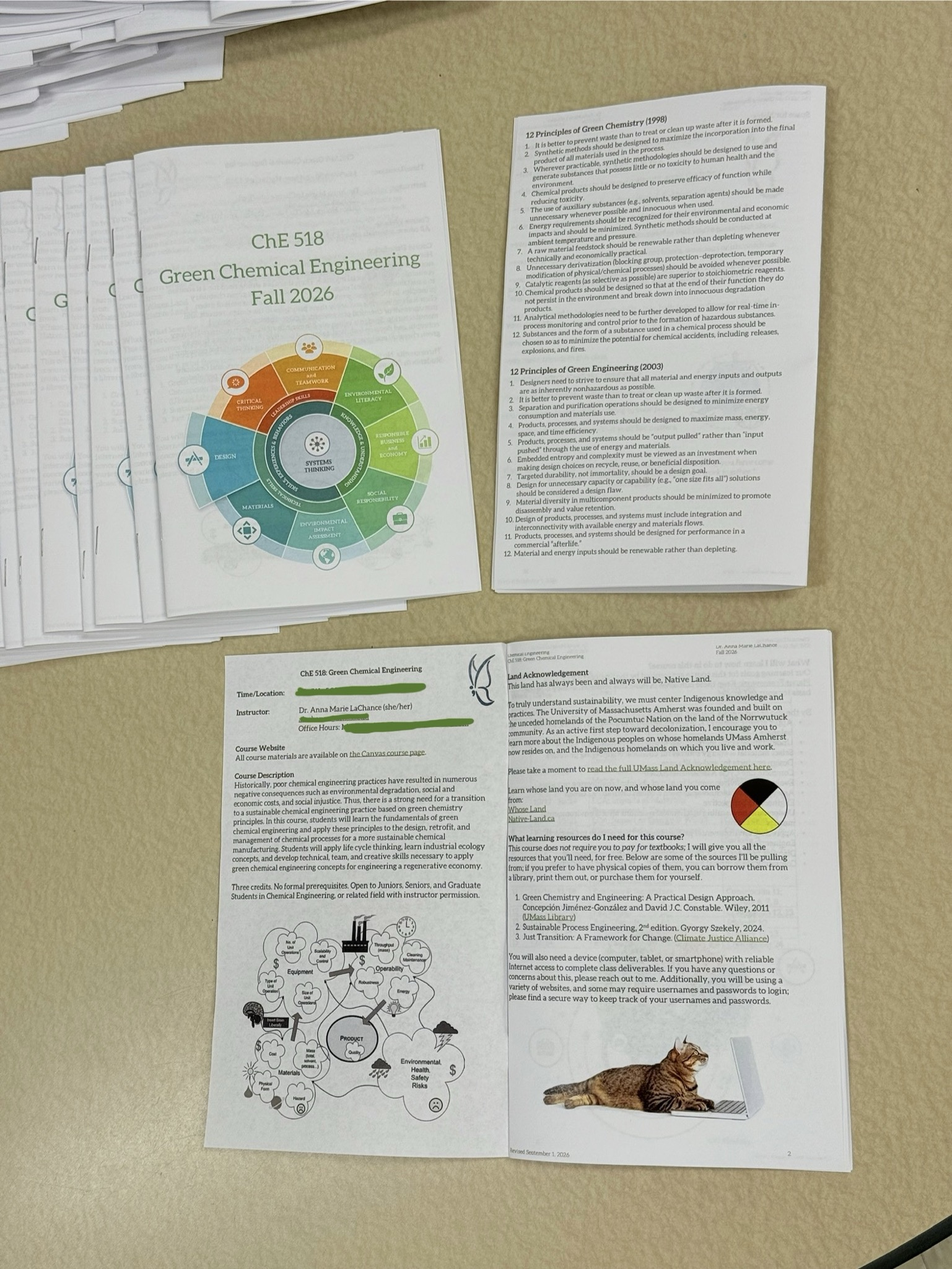
Those familiar with my work know that I also turned my Process Control syllabus into a zine. In fact, I published a conference paper about my approach to zine syllabi for the 2026 ASEE National Conference, which you can access on my website. This year, I went even harder. For one, I decided to make my green chemistry course syllabus into a zine as well; this one features the 12 Principles of Green Chemistry on the back cover and multiple other helpful visuals (e.g., life cycle stages) that they'll find useful over the course of the semester.
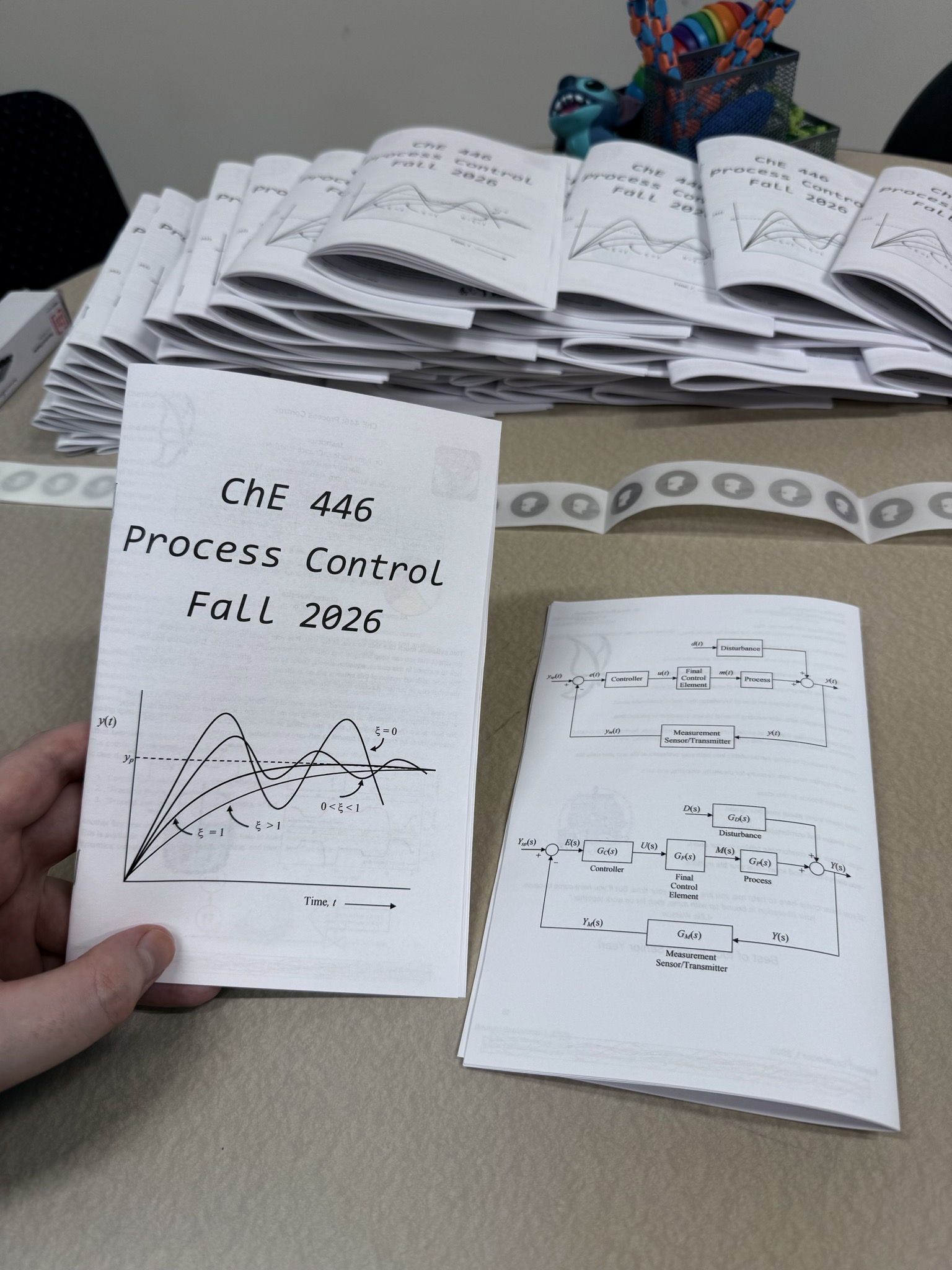
In my Process Control syllabus, I've added a whole new dimension to course engagement with a rewritable NFC tag. This is a small sticker that I placed on the inside cover that, at its most basic level, can open a hyperlink when placed against a smartphone. I currently have all the tags set to the class playlist. But since it can link to anything, perhaps students may find it useful to link to the course text, a site with MATLAB tutorials, or some other resource that's helpful to them. With some technical know-how, you can also set up smartphone automations; people have used these tags to start their air conditioner or set their smart lights to a specific setting. Perhaps students can set up the tag so that it temporarily blocks Instagram (the infamous Brick product is literally just an NFC tag in a plastic case) or sends a group chat message to their study group? The choice is theirs! I'm excited to see how this new level of syllabus interaction goes for my students.
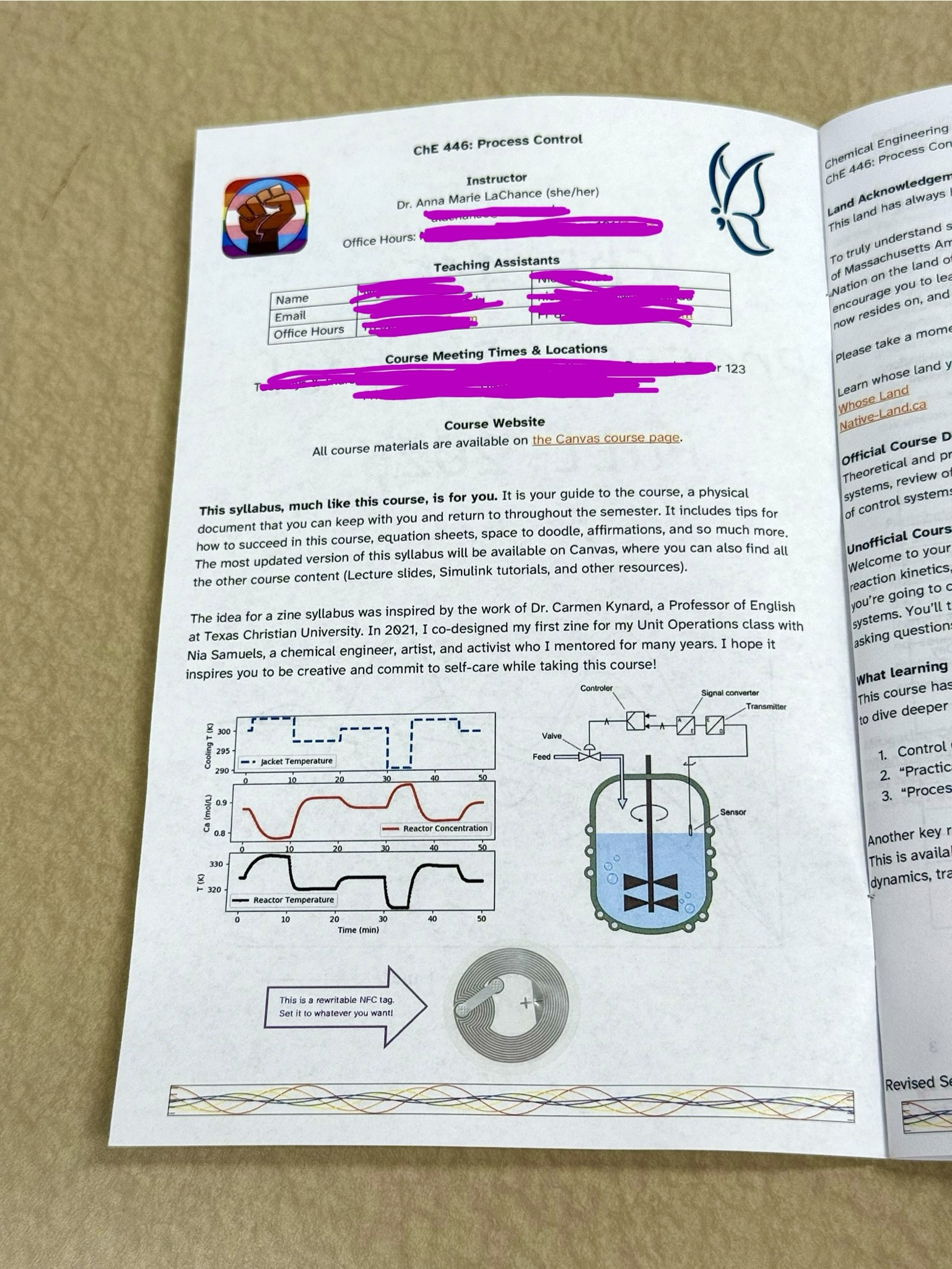
More importantly than what you can do with the syllabus, of course, is what's inside of it. This year, I added a whole new section: an AI Transparency Statement. Part of the problem with the conversation around student use of AI, and really higher education in general, is a lack of trust. I wrote about this back in June, but basically, teachers are using "AI detection software" and other tricks to "catch" students using LLMs to generate their assignment submissions without thinking, and in a sort of cat-and-mouse game, students are using tools like Humanize.AI to make adjustments to their work to avoid AI detection, even if they're not using AI in the first place. There have also been multiple high-profile cases of students suing their universities after being accused of using AI or even suing their universities when their teachers used AI-generated course materials.
To attempt to rebuild that lost trust, I decided this semester to include an AI Transparency Statement in my syllabi to disclose my own AI (non-)use. This comes right before my own AI policy to emphasize that before I tell students what they can or can't do, I will promise you this first. It also models what I want them to do, which is to disclose their AI use when it comes to coding, writing, etc. Below are both statements.
My AI Transparency Statement
Before discussing the ways that you should/shouldn’t use LLMs, here are my promises to you:
- None of your course materials will be produced using generative AI, with the extremely rare exception of AI-assisted code (which will always be disclosed). I developed these course materials myself with deep consideration for who you are as learners and what professional skills you need to develop. You’re currently paying thousands of dollars to experience rich learning in community with your peers, not to be fed slop.
- None of your work will be uploaded to an AI system for any reason, including “grading” or plagiarism-checking. Everything you type into a chat interface gets used as training data, so I will never upload your personal data (names, student IDs, email addresses) or intellectual property (submitted work) as this would be a FERPA violation. Also, so-called "AI detection” tools famously don’t work very well and discriminate against neurodivergent learners and non-native English speakers.
- My AI policies will be informed by scholarly literature and empirical studies about the development, maintenance, and large- and small-scale educational impacts of LLM products, not vibes-based hype-cycle marketing (“it’s inevitable!”) nor fearmongering (“it’ll destroy us all!”).
Can we use ChatGPT and other AI-based writing tools in this course?
I articulate my full classroom AI policy in the video posted to Canvas. I personally view generative AI as a tool that has some potential to help diverse learners but whose impact on learning can be highly detrimental if used irresponsibly. Ideally, you would simply not use Large Language Models (LLMs) in my class. If you do use LLMs for your assignments, it should always be as a starting point for further refinement & interrogation of the core ideas presented in the class. Also, many of the scenarios that will be given to you throughout the semester are rooted in the hyper-specific context of the readings being studied, the area of the world we live in, and our personal positionalities, which may make reliance on generative writing tools difficult.
Please also recognize that, for FERPA reasons, you should never identify yourselves to third party services (such as ChatGPT) which are not contracted by the university. Currently, the UMass GenAI platform claims FERPA-compliance, though I remain skeptical of its data integrity. For bonus points this semester, email me a meme dunking on generative AI. Please also see the APA Style Guide for how to properly cite large language models such as ChatGPT. Finally, if it is ever determined that you are exclusively using AI tools without editorial oversight, this could be considered grounds for an incomplete submission which could negatively affect your final grade. In general, if it is determined that your assignment is entirely AI-generated, you will be asked to resubmit the work. I aim to be restorative rather than punitive, but I reserve the right to give you a grade of “0” on any given assignment if I determine that little to no effort was made to complete it.
|
DON’T |
DO |
|
Rely solely on LLMs for
answering questions |
Fact-check everything you
read from LLMs using other sources |
|
Have an LLM write your
whole response for you |
Use LLMs to better
understand a question, generate ideas, edit YOUR text, etc. |
|
Have an LLM code everything
for you |
Ask an LLM for help with
syntax or give suggestions on data presentation & accessibility |
|
Wait until the last minute
to do an assignment, then have an LLM do things for you |
Start work early; go to
office hours, contact me, or contact a TA if you need help with something |
|
Give your personal
information, passwords, etc. to any AI-driven system |
Use FERPA-compliant tools
or local models |
Lastly, I want to highlight two new assignment types that I'm adding this year to encourage self-expression and creativity. First, in my Process Control course, every homework assignment will include one Challenge Problem. While most other assignments have a well-defined singular answer that I'm looking for, these problems are designed to be open-ended without a clear answer, and they'll be graded with an entirely separate rubric. I can't say much in case my students are reading, but let's say they will involve some real-world problem solving. The first Challenge Problem asks why the classroom we're in is so freaking hot all the time; students will have to take real-world measurements of room volume, air flow, and material properties to determine why the room temperature isn't being properly controlled. How will students approach the problem? I guess we'll find out!
Also, I'm having students in my green chemistry course write a personal Environmental Autobiography for their very first take-home assignment. If you're never done this exercise, you basically explain your relationship to nature over the course of your life, talking about where you're from, what your family's background is, and what forces shaped how much time you spend in nature. An example of my own environmental autobiography is below. I will encourage students to submit their own either in text form or in graphic form, as a map of their hometown, a zine, a comic, or something else entirely.
My Environmental Autobiography (written by me, October 2024)
My grandparents on my mom’s side, who I was always closest to since my dad was adopted, were immigrants from Poland. My grandmother fled Nazi violence when she was just 8 years old, and my grandfather lied about his age to fight in World War II. They met in America while they were in nature: my grandmother was the head of the first Polish-American girl scout troop, and she was taking her scouts on a camping trip when my grandfather wandered up to their campsite with a guitar and started playing. They were very in touch in nature, raising my mom and her siblings in Waterbury, CT and taking yearly family vacations to Cape Cod.
My parents also met outside; they met at UConn, waiting for tickets to see Sting and The Police in the early 1980s. They too were big on trips to the beach, which bored the hell out of me as a neurodivergent child in need of stimulation. I was raised in Wolcott, CT, a smaller town with a good STEM program but without much to do. It was a hilly town with no sidewalks, making it impossible to get anywhere without a car, and it was oddly segregated between mansions owned by wealthier folks (who presumably funded the school system’s strong STEM programs) and literal slums owned by people who fancied themselves rednecks. I was also born in 1995, the year that the racist concept of the “superpredator” was coined at the height of a moral panic about scary men who snatched up kids off the streets, terrifying my suburban white mom.
Needless to say, I was an inside kid, content with my PlayStations and Gameboys. Fortunately, I had good STEM mentors, like my AP Chemistry teacher, my calculus teacher, and my physics teacher who led my high school’s FIRST Robotics Team. From them, I knew I liked chemistry and engineering, so without really knowing what a chemical engineer was, I applied to UConn for that major.
As soon as I got on campus my overall health drastically improved because I walked everywhere and had access to healthy food whenever I wanted from the dining halls. It made me wonder how much better off the world would be if everyone had access to healthy foods and we weren’t all stuck commuting via cars every day. UConn’s campus was big and beautiful, and for the first time in my life, I learned to truly enjoy being outdoors. As I took more classes, I learned about climate change and feminism. For my Spring Break in 2017, I got to travel with a bunch of my best friends to Puerto Rico and experience the most beautiful landscapes I’ve ever seen. Just five months later, Hurricane Maria devastated Puerto Rico, and the U.S. mostly left it behind. This served as one of my first big wake up calls that a) climate change wasn’t just coming, it was already here, and b) the government isn’t coming to help us, so we better come up with solutions ourselves.
Once I got to graduate school, I took on a project related to reducing plastic waste, exploring compostable food packaging and merging my interest in materials science with my desire to help nature. I also started transitioning (during the first year of Trump’s presidency, no less; seeing him visit Puerto Rico only to throw a roll of paper towels into a crowd like a t-shirt at a basketball game permanently altered my brain chemistry). Through exploring queerness, I learned so much about the social and political dynamics of the world we live in, particularly the ways in which marginalized voices are silenced.
When the pandemic started, going on walks (either in nature or just around my neighborhood) was the best thing I did for my mental health. As social media dominates every element of our lives, including the means by which we communicate, I’m learning to appreciate the importance of embodied experiences and bioregionalism, the practice of being “of a place”.
Last summer, I met the love of my life…naturally, I met them outside, for coffee. Last week, we celebrated our one-year anniversary. Nature truly gives us everything we need.
In the back of my mind as I write any assignment these days, unfortunately, is how to make things more resilient against LLM-based cheating. I think a major part of that is to root student work in our local context (e.g., the UMass campus specifically) and to allow students to self-express and nurture their own unique problem-solving style (rather than forcing everyone to converge on the same "correct" answer). As we've now seen multiple scientific papers on now, LLMs are getting people to converge to the same "mid" writing style; my hope is that freeing students from the unnecessary constraints of a "proper college essay" will incentivize them to put their real human brains to the test while providing them sufficient challenge. I can't wait to see what they make!
Comments ()