They're Laughing At Us
On Last Ditch Bar (a place I've actually been to) and the horror of being queer in public.
My first and fondest memory of Last Ditch is of the bar's opening night. I happened to be at a makerspace in Greenfield earlier that day with two of my students working on a service-learning project for my Polymer Processing class. I casually brought up that tonight was the first event at a new lesbian bar in town, a Wicked-themed drag show, and that I was planning to attend. My students were immediately interested, with "haha what if we went to a drag show with our professor" quickly turning from a joke to a serious consideration.
I was of two minds about the students tagging along with me. On one hand, I do believe in breaking down the student-teacher hierarchy and being able to engage with my students as equals, especially if we'd be interacting "in the real world" outside the capacity of the class project, and that a well-rounded education requires students and teachers bringing their "full selves" into the classroom, within some professional limits. In this case, one of these students had come out to be previously as bisexual, so introducing this student to their own history could have been a particularly powerful thing indeed. At the same time, given the absolute state of today's America, I know how this looks: trans teacher takes students to a gay drag show at a lesbian bar, the students see something "inappropriate" (stripping of clothes, etc.), get uncomfortable, yada yada, I end up on Fox News and then lose my job. Many such cases.
This constant vigilance of the tension between my desire for connection and my need for self-preservation, between ideology and pragmatism is, of course, the goal of all this conservative rhetoric and policy-making around bathrooms, sports, healthcare, etc.: making my everyday life harder. At my workplace, I consciously time my visits to the women's restroom to increase my chances of being in there alone, so as to minimize my chances of making a cis woman uncomfortable, or worse, getting cussed out by a particularly feisty 'phobe. Classes let out at specific times throughout the day—for example, an 11:00am-11:15am gap between the classes that take place from 10:10am-11:00am and 11:15am-12:05pm—so when possible I strategically try to pee in the middle of class periods, around 10:30am or 11:30am, when the hallways aren't full of students arriving late to or arriving early from class. Such is life in these strange, dehumanizing times; stereotype threat follows me everywhere as a tall, purple-haired, gender non-conforming cane user who masks in public.
In no small part because of this daily dehumanization, I want so desperately to connect with my students as humans, as equals. So while I agree to take these two to their first-ever drag show, I also fumble through an explanation that I made no promises that anything they experienced at the drag show would be school-appropriate. Luckily, they seem to understand without me having to spell out for them that, while I would love to experience this with them, I also fear for my life. We're all in agreement: We'd go to the Wicked-themed drag show at the Western Mass COVID-conscious lesbian bar, and whatever happens happens. We're all consenting adults who are excited to attend and absolutely nobody is feeling pressured to go, or stay if they don't 100% feel like it. It helps that I've known these students for a while, having been working with them to build an injection molder, an oddly personal experience of hands-on tinkering and problem solving through which we've built up some level of trust.
It's a short walk from the makerspace to Last Ditch, quite literally around the corner. I'm familiar with the location, as I was a semi-regular attendee at the last queer bar in this very same spot, 10 Forward. 10 Forward was where I met a few of my now good friends, and it was at a free introductory DJing class where I learned to cross-fade two house tracks for the first time, an experience so revelatory I bought my first set of DJ decks the very next day. 10 Forward ultimately went under in no small part due to its own queer drama which, if you can believe it, also involved a polyamorous breakup of sorts. But we're getting ahead of ourselves. My students and I enter the bar, now under new ownership and a new name but with the same checkered tiling and familiar layout, a mix of folding chairs and couches facing a minuscule stage. A curtained area opposite the stage, which has some booth seating, is acting as a makeshift changing room for today's performers.
In the warm, dim glow of the venue, I clue my students into the basics of how a drag show operates, handing them small stacks of the $1 bills that I'd acquired earlier in the day for the sole purpose of giving to tonight's queens. Over mocktails, they ask me more about drag as an art form and I'm delighted to bring them into my history (for at least one of them, their history), giving book recommendations, weaving tales of protests, and making grand statements about how queer and trans people have always been here. They even bravely ask about my own transition and whether my family has always been supportive of it, and somehow, despite my inherent fear of sharing this vulnerable part of myself, I answer honestly. Maybe it was the physical separation from where I normally see these two—the classroom—or maybe it was something special about the place itself that empowered us all to open up a bit.
The show begins and, obviously, it's pure magic from start to finish. The event hostess reminds us of how rare and special it is that we have a POC-led drag event at one of the vanishingly few lesbian bars in the country, and for that space to be disability-friendly by virtue of its masking policy. My students and I spend the rest of the evening passing out singles to the talent and singing along to iconic tracks like "Popular" and "Defying Gravity". The latter always seems to make me cry, and tonight is no exception; what is And if I'm flying solo / At least I'm flying free if not the queer mantra of bravely asserting your subjectivity in a world that thinks you're an impossibility? Conservatives believe that trans people are inconsistent with nature itself, not just anti-social but against the very laws of physics. Changing your gender is like defying gravity. And yet, here we are, doing it every day.
The night ends and we all get home safe and sound. My students report that the experience was life-changing and that they were extremely grateful to have me as a teacher.
These human moments are how I'd prefer to remember Last Ditch in Greenfield, Massachusetts; with a feeling of immense pride at what we as a community are able to accomplish when we come together. Sadly, I don't have many other memories besides this; not long after this opening night I moved from a small town roughly 15 minutes away from Greenfield to a small town roughly 30 minutes away, so my willingness to attend an event that starts at 8:00pm (basically my bedtime!) sharply declined. Whenever I could, I went to a punk show here, a concert to support the local DSA chapter there. Gotta support one of the last lesbian bars in existence, right? Apparently, "whenever you can" doesn't mean much when you're a busy academic with chronic pain.
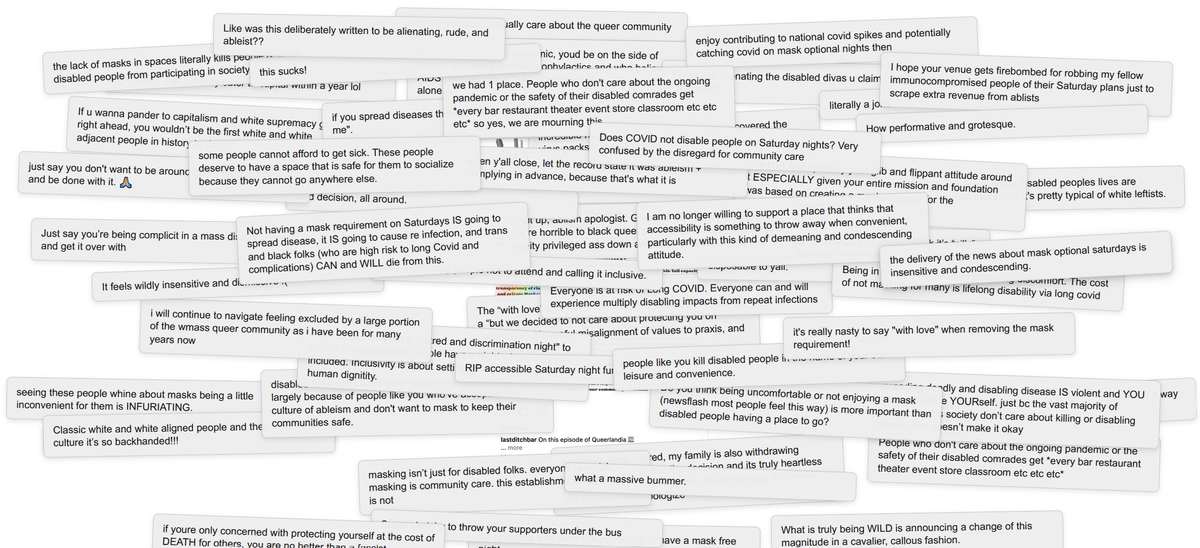
I hadn't been to the bar in several months when the drama first began. Last Ditch had posted on Instagram that they were moving from "masks required" all nights to having a single night a week which was "masks optional", unless there was a specific event where the organizers or performers had requested a mask requirement, in which case that date would still be "masks required". A reasonable request from a struggling business, but not to everybody. The rest, covered with some degree of rigor by the Boston Globe this past week, devolves from there. The article paints the picture of a community fractured, eating itself alive for no good reason, a business owner $50,000 in debt trying to do the right thing for her business versus a bunch of impetulent, demanding children.
I will state plainly that, as far as "sides" are even something can be chosen here, I am on the "side" of "the bar is doing the right thing by having most Saturdays be mask-optional because they need to stay in business, and while people are right to feel upset about it, they could instead put their energy towards requesting that other businesses have even a single mask-friendly night per week". I say this as a Western Mass COVID-conscious lesbian who wears a face mask while indoors and in public; yes, still in the big year of 2026. My read on the situation is that this is the majority opinion, even locally; among bar patrons, the people who support the move to mask-optional Saturdays number in the hundreds, while those leaving nasty Instagram comments number in the dozens (and may have never even been patrons anyway; that one person who threatened to "firebomb" the place doesn't even live in the area, a fact that the Globe article conveniently left out of its reporting).
At the same time, we also should give people some level of grace when they are acting in ways that we deem unreasonable. After all, sometimes being in community means treating the most "annoying" members of your community with dignity. Speaking from first-hand experience, Long COVID sucks, and it must feel really dehumanizing when a space you thought was yours, one of the only and possibly the only space that you knew for a fact would always accommodate you, is now no longer available to you on your one day off. Truly try to imagine what it must be like to be permanently disabled by a virus that 99% of humanity isn't taking seriously and is thus still spreading and able to kill you; you are unemployable, you are ostracized, you have very little control over anything in your life. Surely, we can at least try to sympathize with this. I got lucky; I have a cushy academic job where, sure, people look at me funny because I wear a mask and use a cane, but I don't receive active harassment for it. I have health care and a great doctor who actively seeks out the newest scientific literature on Long COVID, bless her heart. I even have some students and colleagues who don't mask regularly but are willing to mask when they come into my office. The fact that I "made it" only makes me ache harder for people who are hurt and grasping for control, even as they hurt people in their flailing.
I remind you, the reader, once again that I was not extremely privy to all the finer details of the case when I say this, but: in this case, it seems as though this particular "community fracture" somewhat broke down across the lines of disabled people of color and white people defending the business' decision. When disabled people or people of color explode like this, it's usually the result of years of gaslighting and other microaggressions finally bubbling to the surface. Perhaps the bar owners did mistreat the pro-maskers in some ways that are being made invisible to the casual reader of the Globe article and the content creators covering the story game-of-telephone style. I straight up don't know! Perhaps even those closest to the story don't even know! And perhaps nobody will ever know now that the members of this discussion are, presumably and justifiably, going into hiding following the story's nation-wide virality!
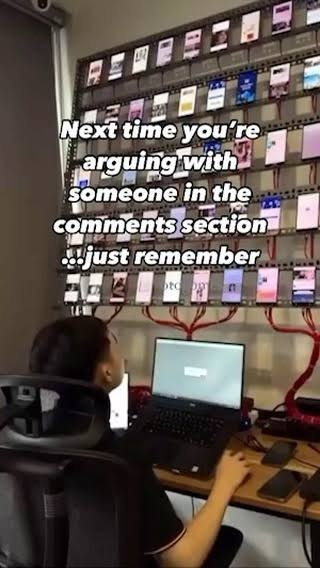
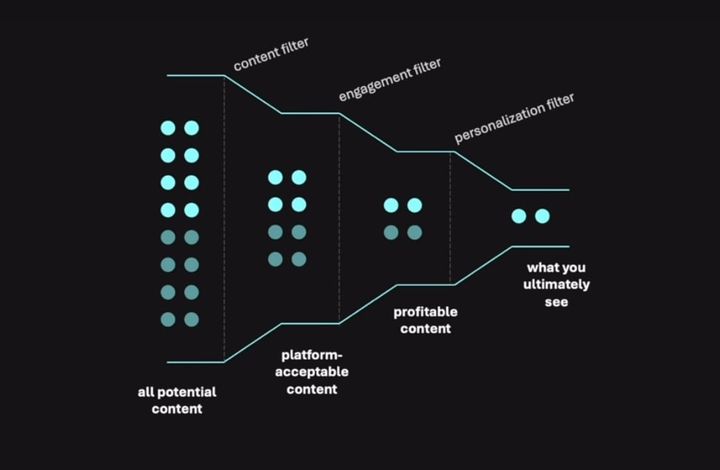
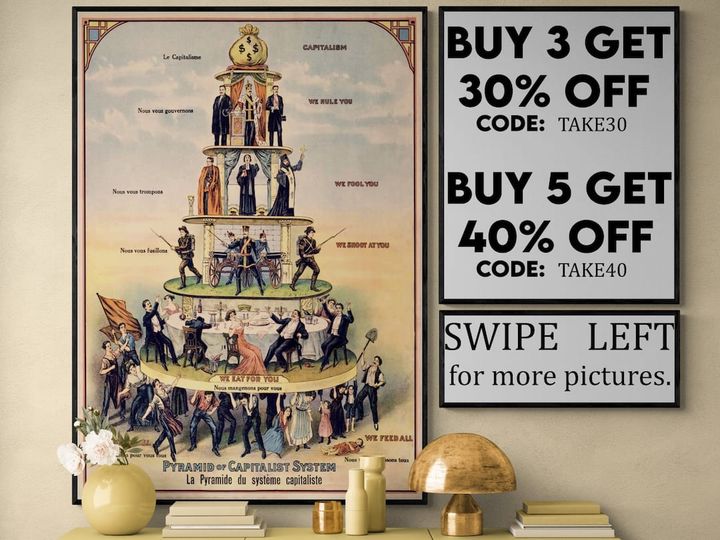
Yes, the very worst part of this situation is that this thing which perhaps involved fewer than 100 real people got picked up by a major news outlet and has been spreading nationally. Already, despite the Boston Globe story about Last Ditch now being only five days old, the topic has been talked to death from all possible angles, from "leftists are out of touch and this is a microcosm of why we're losing politically" to "this article only went viral because of bigots like Jesse Singal who blew this out of proportion so people would gang up on lesbians and disabled people in this time of fascism" to "actually this is really all about capitalism and how the goals of community-centric, socially-conscious third spaces are incompatible with the goals of a for-profit business" to "wow gay people are stupid and hating them is therefore justified". Such is the breakneck speed of the modern internet. I guess that's my main take on all of this, one that I've been beating the drum on for a while: thanks to the Internet, you never have to interact with someone you disagree with if you don't want to.
Much like how I only experienced "the Last Ditch situation" in the form of Instagram comments, if you aren't invested in queer culture, either in the fandom or anti-fandom sense, queer culture gets delivered to you in the form of an occasional fortune cookie's worth of context every few months. This is how we get reactions of Ted Cruz and other conservative politicians to the situation, reactions that never should have happened because this situation should never have been national news, which mostly amount to "I truly had no idea there were people still masking in 2026". And boy, is it frustrating.
The Globe article truly does not show the queer community at its best. Queerness should be a celebrating of humanity and its diversity, but made public here is our gross underbelly. The use of therapyspeak to dodge normal conversations; people making terrible business decisions due to the incredibly high standards of leftist purity culture; we can't even enjoy Lady Gaga anymore, apparently! You couldn't have written a better scene of queer people appearing anti-human. Many have likened it to an episode of Portlandia, but in real life.
And therein lies the problem: this is not a fictional TV show, it is real life, with real people whose livelihoods matters. If I were to make some sort of punchy, algorithm-friendly joke about What We Queer People Are Like, it would probably go something like this:
lesbian spaces: we are inclusive of cis women, trans women, non-binary people, certain types of trans guy, immunocompromised people, and people of all races, body types, religions, and classes!! except eat the rich!!
gay spaces: no fatties no femmes no asians
Of course, this would get misinterpreted from what I actually mean (that all queer spaces should aspire to be as inclusive as lesbian spaces are) to something else (either that lesbians need to loosen up, or that all types of queer people are stupid and evil). Again, online, you can live in whatever reality you want to.
I cannot deny that, on a monkey-brain level, I find this whole situation somewhat embarrassing. Nobody is ever going to take masking seriously again, I think to myself, but then, well, it was already true that nobody was masking, but it FEELS a lot more cemented now. It's the same thing that happens when a trans woman does something embarrassing and Republicans elevate it to a national scale; oh no, cis people are going to see this!! Intellectually, I know that this shouldn't matter, that they are utilizing trans people's status as a minority who can't correct misinformation at scale to beat us down and call us all anti-social losers. Intellectually, I know that it wouldn't matter if every trans person alive was a perfect angel who never made mistakes, because they would still hold us up as impossibilities, most likely by simply lying (how many still believe that there were litter boxes in schools?) However, it's hard not to be upset, if not at the militant pro-maskers then at the right-wing media infrastructure that makes this all possible. You win, conservatives, I'm "triggered". Congratulations. Is gas cheap yet?
The early cyberfeminists imagined the internet as a place of liberation, where anybody could be whatever they wanted because they wouldn't be subject to traditional forms of social control. In practice, this did not happen. These admittedly very smart feminists failed to anticipate corporate control of the internet and how people would flock to their algorithmically-controlled platforms like Facebook, Instagram, X, and TikTok, thereby only becoming more reactionary as the platforms incentivize, well, reactions over true understanding of humanity. The radical potential of the internet has yet to be realized, and maybe never will. Maybe this why I treasure real-world spaces so much; the classroom, the makerspace, and yes, the Western Mass COVID-conscious lesbian bar. In the real world, you're usually forced to confront people's humanity; there's shared responsibility, shared risk, and compromises between idealized values and practical survival needs.
In fact, I'm currently making plans to visit Last Ditch next weekend, to support the bar after everything it's been through. At the very least, the bar has two things going for it: 1) 99.99% of those willing to comment something nasty online aren't actually willing to show up in person and say it to someone's face, and 2) after a few days, the internet will have moved onto a new target for its fury. Coincidentally, it's these facts (and these facts alone) that give me peace whenever I worry about whether I'll be a target one day. It's unclear what's next for the business; maybe the national attention will drive some curious new customers, maybe the controversy will drive everyone away and it'll be closed within a month.
One thing is for sure, though: whatever joy we have at Last Ditch in the meantime, you won't be hearing about it online.
Comments ()