The Vegan Problem
On the futility of posting.
I) Why Are Vegans Like That?
Mention the existence of vegans in the right setting and people will automatically know that you mean "a self-righteous asshole". "Vegan" is cultural shorthand for a cringe, annoying moralist who insists that not only is their way of life the correct way to live, but that there is political imperative to make as many other people live by that way as possible. A person who will actively shame you for your decision to eat meat. We've all met a person like this, right? ...Right?
Discriminating against vegans is fairly normal in our culture. This 2022 meta-analysis on the perception of vegans outlines the various ways in which vegans are stigmatized, the role of political ideology in how vegans are treated, and more. Not that we needed science to tell us this, as vegans are a go-to topic in stand-up comedy sets, online cringe content, and depending on the makeup of your social group, daily casual conversation. This 2015 study highlights this stereotyping, stating that "unlike other forms of bias (e.g., racism, sexism), negativity toward vegetarians and vegans is not widely considered a societal problem; rather, negativity toward vegetarians and vegans is commonplace and largely accepted." (Note: this is not to insinuate that anti-vegan bias is morally on par with being racist, sexist, ableist, etc.)
Why such hatred? I'm not a vegan myself¹, but here's an answer: Vegans threaten the idea that we are good people. Their existence alone exposes the cognitive dissonance between "I love animals" and "I eat animals", and when our moral sense of self is threatened, we lash out. They also threaten social norms; when someone says eating meat is wrong, but you come from a culture where eating certain kinds of meat has spiritual or cultural significance, you perceive vegans as a direct attack on your way of life. Pretty much everyone wants to believe they are a good person, so when someone comes up and says "you are not a good person because you do [thing that you see as normal]", it makes total sense to feel threatened.
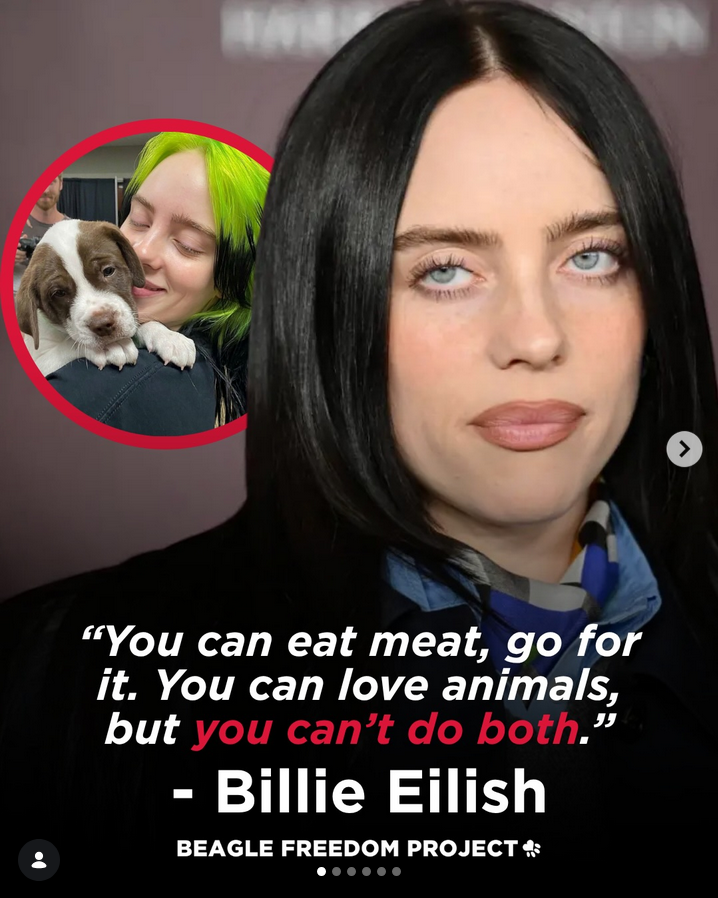
Nobody likes an arrogant asshole who thinks they're holier than thou, and indeed, some vegans are annoying. However, there's a bit of an unspoken assumption here: that all vegans are the same in believing that everyone ought to be a vegan or else they are a bad person. Is that true? Certainly, there are many people who are outspoken about their veganism–Billie Eilish is a recent high-profile example–but I've also met plenty of vegans who are simply going about their lives making their personal diet choices without judging others at all. People who are vegan but won't make a stink if their veggie burger happened to be cooked on the same griddle as the meat ones. People who you may not even know are vegan until months into being friends with them because they simply keep it to themselves. People who are vegan for other reasons, such as their own health, that have nothing to do with activism. People who are not dogmatic or cringe but instead easy-going, unobtrusive, "normal".
To use the sort of blunt language we might see in vitriolic online debates, what percentage of vegans are the "annoying"/radical/activist kind and what percentage are "normal"/non-activist? Numbers are hard to find, as we don't send out national surveys about people's annoyingness levels. However, we can make some assumptions to get to somewhat of an answer. (By the way, if you know more about this subject, I do hope you reach out and correct me on these numbers! This is based on just a few brief hours of online research and this is not my typical area of academic study.) First of all, via recent Gallup polls, only 1% of Americans are vegan. If we assume that the annoying/normal split aligns 1:1 with vegans who participate in regular radical activism about veganism as a political issue versus vegans who do not participate in radical activism, we find that somewhere between ~1-6% of all vegans fall into the "activist" category. That 6% number, the most generous count I could find, is based on a 2019 study where out of n=578 participants, 134 "limited their consumption of animal/meat products" and engaged in some political actions, while only 34 "strictly limited their consumption of animal/meat products and engaged in both political and radical actions". That's just one study with a small sample size, and others place the number of radical activists far lower. Far more are "lifestyle" vegans who are vegans for apolitical reasons or who at least do not engage in regular radical activism, and if this 2021 study is to be believed, 42% of vegans eat the way they do exclusively for health reasons with no grander political aspiration.
In conclusion, as few as 1% of 1% (0.01%) of the total U.S. population are "annoying vegans". This tiny minority, a minuscule slice of our species, engages in regular high-publicity activism and are likely the ones that show up in, say, vegan cringe compilations. Taking the U.S. population of ~350 million as an example, 0.01% of the population is a mere 35,000 people, not a huge amount but still enough to command the attention of online spaces like the subreddit r/AntiVegan and other well-documented forms of online harassment.
There's something tantalizing about that "1%" number, isn't it? Such a clean, mathematical way to imply that "this amount is insignificant". A lot of you probably know where I'm going with this, but let's stick with vegans for a moment longer.
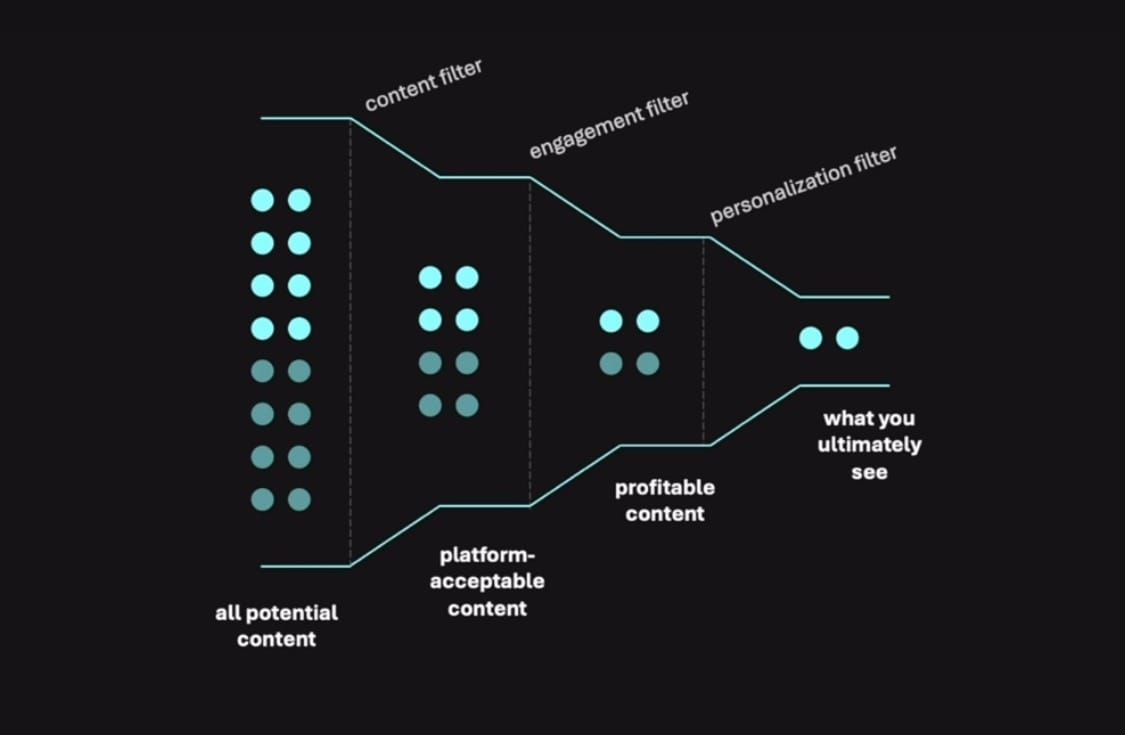
Online spaces exacerbate this issue in a major way. In your real life, you may never encounter a vegan at all, but on the Internet, you can find yourself in an algorithmically-curated echo chamber of virtually any possible position that is capable of being held. While this can mean that more people are exposed to vegans who are "normal", well-adjusted, and non-radical, people who are more likely to create sympathetic views of vegans in non-vegans, it also means that the most "annoying" ones are the most amplified. Posts that generate the most engagement are sent to a wider audience, so naturally, takes that are shocking, reactionary, or extreme reach far outside a post's intended community by means of quote tweet-dunking, TikTok stitches, story posts, etc. Measured takes, longform content, and healthy debates are not amplified in the same way. By this mechanism, the vocal "meat is murder", throws-fake-blood-on-people crowd not only gets cast as a bigger problem than they actually are, but as representatives of the veganism/vegetarianism movement as a whole. This is a negative feedback loop, too; extremist vegan content leads to extremist anti-vegan content. Then, when anti-vegan hate is so strong, it pushes vegans to be even more extreme in their rhetoric, because extremism begets extremism. After all, if vegans are such a small, insignificant part of the population, how do tens of thousands of people get whipped into an anti-vegan frenzy to the point where they post daily about it? As a reaction to a reaction to a reaction. It's reactionary all the way down.
Besides, when all else fails, you can just lie. The old viral claim that PETA members went around to various animal shelters to euthanize pets turned out to be largely misinformation (PETA is still whack though). There are extremely few documented cases of vegans throwing fake blood on people (that I could find), though there are some examples of activists pouring fake blood on the floors of businesses or on themselves as part of visibility demonstrations. There have even been reports of the meat industry paying people to make up lies about vegans online, some going as far as making online accounts pretending to be vegans which post the most extreme content. In other words, that "annoying vegan" you interacted with on Twitter may not be a vegan, or even a human. Conspiracy theories are real!
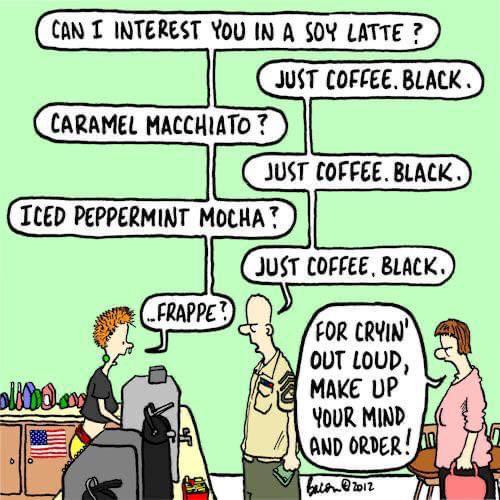
This all creates intra-group tensions as well. Not only do lots of non-vegan people dislike vegans, there are vegans who feel the need to distance themselves from the extremist "vocal minority" who by no means represents the majority opinion among vegans. Again, most vegans are not political vegans. You may have heard people state their dietary preferences as some version of "I'm vegan, but I'm not annoying about it" or some other qualifier. In addition to vegan sympathizers, there is no shortage of vegans themselves who think that the vocal minority are "hurting the cause". Since vegans are only ~1% of the population, they can't fight disinformation easily, so they understandably feel that they must distance themselves from the extremists in order to salvage their cause.
Say what you will about political vegans and their tactics (I could very easily criticize the idea that "getting as many people as possible to not eat animals" won't change the material conditions that cause animals harm, because something something class analysis, etc.), but their political grievances are legitimate. Factory farming is abhorrent from both an animal welfare and environmental perspective; that's why we have a saying about not wanting to know "how the sausage gets made". Eating red meat does indeed lead to increased risk of heart disease and other co-morbidities. Speaking as a non-vegan vegan sympathizer who tries to limit her animal product use as much as possible, I understand their perspective and believe that society should be as accommodating to their diets as possible, even as I know that humanity will never, and probably should never, give up all meat.
The point of this essay isn't to make the case for veganism nor condemn the moral purity of some vegan activists; it's to point out the absurdity of the means through which we discuss these important political issues. The dominant narrative about social media is that it gives voice to the voiceless, that it allows oppressed minorities and niche political causes to reach an audience of millions and make the broader public sympathetic to their struggle. Indeed, social media is a powerful tool for generating awareness of issues; if it weren't, they wouldn't be trying so hard to ban it. At the same time, online spaces tend to warp political movements into political fandoms; for example, reposting vegan content, attending flashy visibility protests, and participating in online hate mobs is seen as the height of "activism". Also, minorities aren't the only ones who have access to these distribution tools; for every political fandom, there is a fierce anti-fandom ready to generate their own content that often reaches potential sympathizers first, hence anti-vegan content. This problem gets worse as the activist group gets smaller; after all, how is a group that only makes up ~1% of the population supposed to counter the narratives of the dominant culture, especially when the few cringe apples in the bunch can be amplified by those in the dominant culture and made to seem like they represent the whole bunch? Or when the 99% can just lie about the 1% and be automatically believed?
Thus, I coin "The Vegan Problem": the phenomenon where a vanishingly small number of outspoken people who don't represent a minority group's belief system are presumed by non-members by many to be avatars of the entire group. The problem has always existed, but is seemingly amplified by an online ecosystem where platforms prioritize attention rather than truth or fair representation of a group. Extremist content a) can be totally fake and b) is distributed far more often than the measured takes and long-form discussions of the minority's majority. The extreme content divides the group at large, making even the more effective movement strategies less so. All the while, the opposition may even be well-funded by members of the ruling class. (This is by no means exclusive to left-wing political causes; see how the cringiest members of MAGA are also used to paint roughly a quarter of the country as "lost causes" who deserve no sympathy or support, or how anybody who posts "Trump voter regret" videos gets treated. While I won't be the first to jump at the chance to help someone who's "kind of a Nazi but working on it", at some point somebody, ideally left-leaning cis white men, has to attempt to reach these people, or this all only ends one way, and they're the ones with all the guns.)
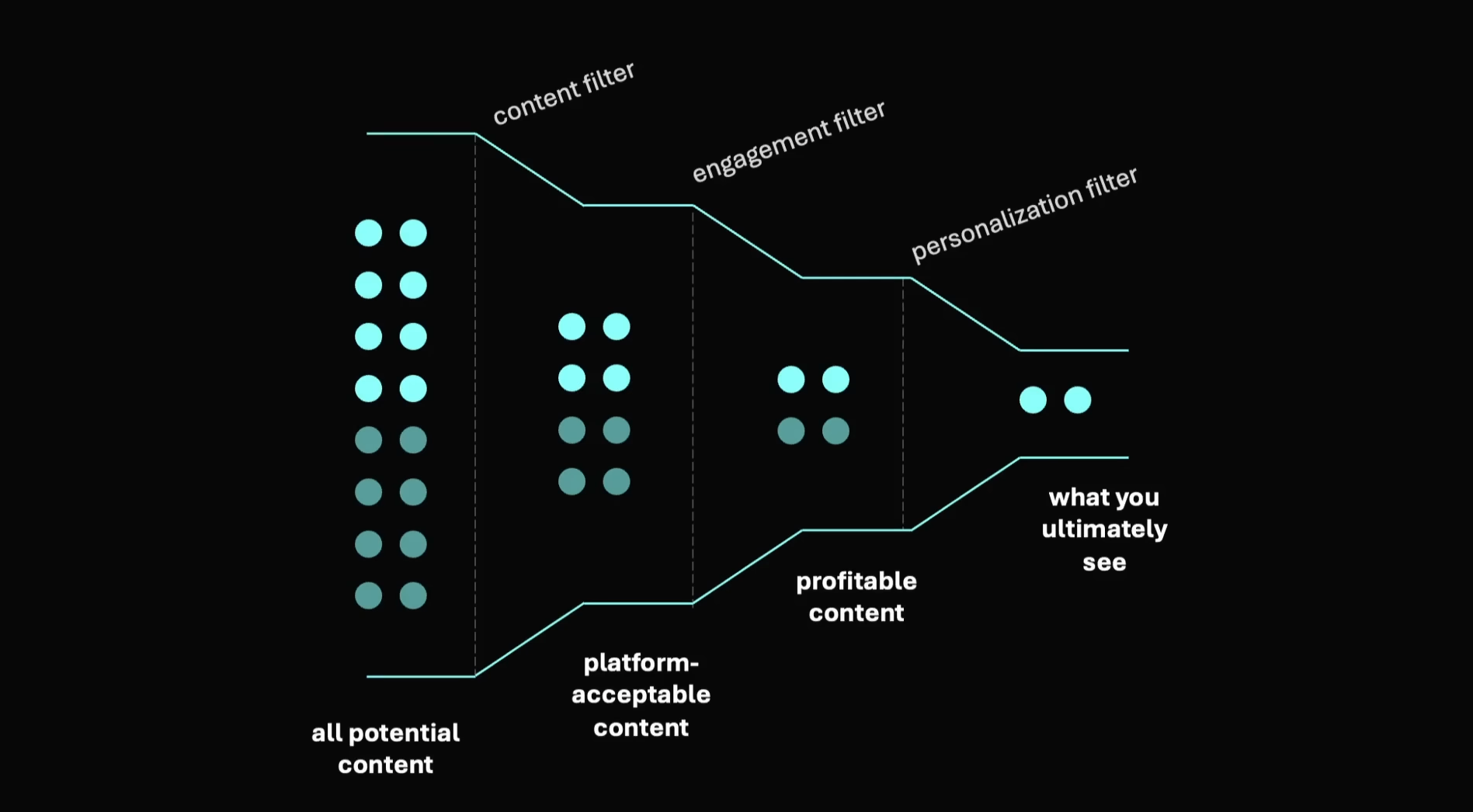
With all this in mind, I must question anybody who says that activists of any movement should simply smile more, that "you catch more flies with honey" and it helps to be reasonable and appeal to the political center. They already are doing that. Every day. It's just that the media ecosystem isn't showing it to you.
Lastly, I'll point out that while increasing the number of vegan sympathizers is an admirable goal (see the reasons discussed at the very top), a certain segment of the population will always be unsympathetic. In the "vegan cringe compilation" I shared earlier, embarrassing videos of young white women rapping are placed directly alongside actual political demonstrations that have, in my view, nothing embarrassing about them at all (6:30-7:05). Remember, to a decent percentage of people, the mere existence of vegans is cringe. They may actually be unreachable, at least by vegans themselves. A non-vegan vegan sympathizer may be able to with a vulnerable long-form conversation, but there is ultimately no "correct behavior" that a vegan can undertake that would change these people's minds. "Reasonable vegans" are placed into the same bucket as the "annoying vegans" no matter how they act. In today's media ecosystem, to borrow from Kacey Musgraves, you're damned if you do and damned if you don't, so you might as well just do whatever you want.
II) Why Are Trans People Like That?
I believe The Vegan Problem can be generalized to numerous other social groups who represent a minority representation in the population, particularly trans people.
There is no shortage of people claiming that the trans community "went too far" in their activism. Stop me if you've heard this one before: I was sympathetic to the trans cause because trans people were mostly harmless people seeking equal protection under civil rights law. But then it got too extreme for me! They started demanding that cis people not only respect their gender identities, but change how they perceive their own genders. They demanded that young people be given hormones without any further question. They demanded that mothers be called "birthing persons". They refused to address completely good-faith questions about transition regret and fairness in sports and they called people bigots for not wanting to sleep with them. They asked for too much too quickly without public buy-in and should have been more moderate and patient. The trans movement lost its way and so now I am centrist/right-wing!
I have some notes.
Addressing each of these point-by-point will require its own essay (which I plan to write later this summer; subscribe now!) What I want to do here is lay out some basic facts to serve as a prologue of sorts to a wider discussion of what the trans community can actually do to protect itself in this political climate.
By most approximations, trans people make up roughly 1-2% of the population. Here in the United States, they are subject to widespread discrimination; employment, housing, medical, interpersonal, and more. Most trans people are not public activists, we are simply living our lives. Due to said discrimination, though, many of us are terminally online and enact most of our interpersonal relationships online through channels public (e.g., BlueSky, Reddit) and private (e.g., Discord servers, Signal chats). This means that much of what trans people say and believe is a) shared on platforms that incentivize the most extreme, anti-social behavior and b) screenshottable.
Creator Sin Eater laid out our community's tendencies towards dogmatic thinking in a recent Substack essay:
The term Hyperreality was coined by French Philosopher Jean Baudrillard to describe the condition in which the line between reality and simulations as depicted in things such as media becomes so blurred that it is no longer possible to distinguish between the two. Social media has only made this worse. Ideas about the world beyond our own subjective personal horizon are no longer only disseminated to us via television, movies, and news media. They are now distributed via global networks that connect the world together and mediated through a policing of which ideas are acceptable and which ones aren’t. This is doubly problematic for newly out queer people, who will be thrust into a world of settled and still debated discourses without the lexicon and shared historical knowledge of those who have been promoting these ideas for years.
Take for example, the idea that to medically transition into a woman is regressive because it conforms to the patriarchal gender binary. Imagine being a newly self realised trans woman, who has been denied access to this world by wider society who don’t want trans people to exist, who joins tumblr or goes to her first queer community in person meet-up to finally seek out people just like her after feeling so alone and this is the first idea they encounter. She doesn’t know any history or theory, how could they? She doesn’t know the lengths to which trans people have fought for our right to access health care, the hoops we’ve had to jump through to get a scrap of hormones, the legal battles fought for the right to be legally recognised as ourselves and the battles we still have to fight to continue to do so. And if this hypothetical totally made up definitely doesn’t exist trans woman dares to ask for clarification? Well then she’s a transmedicalist spouting TERF rhetoric. Doesn’t she know you don’t have to transition to be trans? The NERVE!
All this to say, yes, trans people are often found being publicly dogmatic, cringe, and/or extreme. I won't venture to guess what percentage of us act this way, other than that it is likely fairly few of us, perhaps the ones who enact most of their lives through the Internet. Most trans people I meet on the day to day, though, some whom may even be familiar with these types of online discourses, are pretty level-headed. Online, the vicious debates about non-binary exclusion, transmedicalism, trans women having male privilege, or he/him lesbians rage on day and night, but in the flesh world these issues don't come up, either deemed unimportant or understood to be long-settled. From the inside looking out, I get the sense that the majority of trans people are easy-going people who do not have strong feelings about "genital preferences", the odd clinical language of "birthing person" or "chest feeding", and all the other things that people project onto the community as a whole. You just don't see them, thanks to the same media ecosystem responsible for The Vegan Problem. That said, it's impossible to say what "the majority of trans people" believe, and our attempts to do so are pretty pathetic, as evidenced by some Substacker's recent obsession with figuring out "who is more represented in trans discourse; trans men or trans women?", a question that they both feel is important and attempt to answer by...hand-counting posts on Reddit threads. Awesome guys, very systematic, very scientific².
...But it doesn't matter what most of us believe, now does it?
As established, we have no way of knowing how many of the "trans people" posting online are even real. With the kinds of resources that the far-right has, especially in the era of GenAI where social media accounts can be generated in seconds, there are presumably many paid actors hiding behind those anime profile pics. There's also the right-wing media infrastructure that takes the most extreme things that some of us believe and runs with it, platforming only the most radical among us. As I've covered before, the media uses tactics like agenda setting, framing, and partisan coverage filtering to make trans issues seem more important than they are. Like vegans, even if 100% of trans people were well-adjusted normies, we're starting at a disadvantage because our mere existence runs against the dominant belief that there are two birth-assigned sexes whose boundaries are divinely/biologically ordained and cannot be crossed; our mere existence is inherently threatening to the status quo, to some extent. Trust, too, that the right-wing opposition is very well-funded; in the case of Twitter/X, a right-winger quite literally owns the platform, and billionaires are the ones bankrolling the anti-trans bills, not grassroots anti-trans activists. Most everyday anti-trans losers aren't brave enough to do anything other than leave mean comments, so if all the billionaires went away tomorrow, we'd still have a lot of interpersonal discrimination, but we'd surely not see a single additional anti-trans bill.
It all makes one wonder if creating online educational activist content, the stated purpose of which is "convincing cis people to be sympathetic towards trans people", is even a worthwhile use of our time. At the very least, we should be advocating for more media literacy in general, and then trans sympathy might follow from that. More on that in future essays, I suppose.
And then, of course, they can just lie about us. To this day, there are people believe in the "litter boxes in classrooms" hoax, that one can go to school as one gender and come home having had a sex change operation, that there are tens of thousands of trans athletes in the U.S. (there may very well be under 100), that trans people are responsible for numerous high-profile mass shootings, and more outright fabrications. Psy-ops abound too; online hate groups are regularly found responsible for campaigns that claim to be led by trans people, such as this 2022 4chan hoax related to the dating preferences of straight men. Do you really think there's no one at the FBI pretending to be a puppygirl right now?
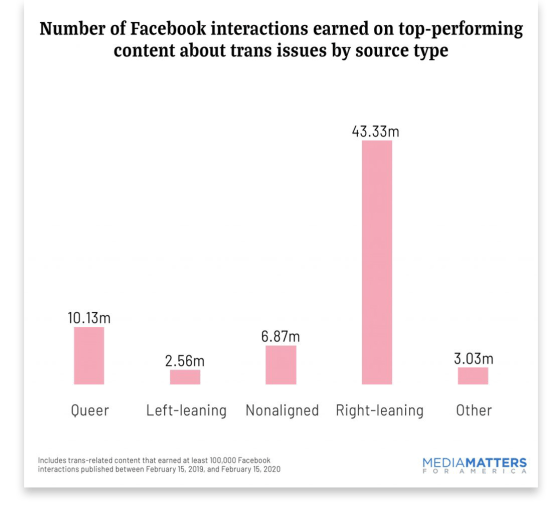
The net result of all of this is that most of the general public, including our allies, has a warped perception of what trans people actually believe. In 2020, it was found that the vast majority of online content about trans people came from right-wing sources. In one particularly odd survey (which admittedly had a small sample size of roughly 1,000, so take it with a grain of salt), some Americans believe that as many as 21% of the population is trans. In a much more robust Pew Research Center survey, one that was the topic of much discussion among trans people last year, it was shown that many Americans simultaneously hold the beliefs that trans people should be legally protected from discrimination and that gender is solely determined by sex at birth. Our community is in this odd deadlock where most people want to respect us, but have no idea how, and where perception of us (as well as, you know, our access to health care) is totally at the mercy of platforms and the right-wingers who own them.
Another group of people catching strays is the detransition/retransition community, itself a sort of subset of the wider trans community. It would likely take a whole book to adequately lay out all the dynamics at play here, much less try to arrive at a solution for an inter-community peace treaty, but at minimum, there are the following actors: the trans community writ large (~1% of the general population, though that's disputed), the detrans community writ large who is largely pro-trans (about ~1% of that, though that's disputed), detrans people who go onto be outspokenly anti-trans (presumably a tiny fraction of that, so at this point <1,000 people on planet Earth), the well-funded right-wing media ecosystem that props up the prior group (e.g., Chloe Cole makes up to $200,000/year through speaking engagements, contrasted with actual trans people who turn to survival sex work or GoFundMe campaigns for basic health care), and broader society who is largely unaware of any of these dynamics. A select few well-funded people get to get to dictate what the general public thinks of not only the detrans community, but the trans community as a whole; many progressives don't quite know what to make of detrans people (other than parroting talking points like "transition regret is less common than knee surgery regret"), while conservatives probably assume that every trans person is a potential detransitioner. Even trans people who are aware of this messed up system, instead of embracing detrans people as community members, try to push them away, to say their problems are not real, that detransition is vanishingly rare, that they all must be "grifters". Extremism begets extremism. A reaction to a reaction to a reaction.
III) What Now?
More than anything, I wish I could end this piece with a simple action item. Stay vigilant, get more media literacy, #ProtectTheDolls, what have you. The Vegan Problem is an important one to grapple with because, after all, to whom do we lay blame for the phenomenon: the ones actually being "annoying"/radical, the much larger number of people who see the annoying people and go onto make assumptions about them, or some higher power (e.g., the platform holders actively maintaining an information ecosystem that prioritizes attention rather than truth)? The ones most responsible, the true 1%, are the least touchable. And don't all groups have some responsibility to not reproduce this dynamic?
What I do know is that the trans community is largely a leaderless movement right now. Between losing generations of our people to HIV/AIDS, neoliberal elite capture that taught us that voting and visibility protests are the only ways to make change in the world, and the bad timing of our "tipping point" being the same year as a fascist Cheeto beginning his onslaught on global democracy, trans people are largely running around like chickens with their heads cut off. Some are fleeing to other countries, which I of course support. Some are rethinking the past decade of trans activism altogether and wondering if it's all our fault, that we "took it too far" somehow. I myself am just trying to make it to the end of the day most days.
Transgender pessimism, presumably a close cousin to Afropessimism, is becoming increasingly popular, at least in my own algorithmic echo chamber. Drawing comparisons to how Jews were only 1% of the population in early 20th century Germany, many believe that trans people alone are simply helpless to stop the rising tide of fascism in the West. The idea of binary sex is too engrained into our species' mythologies, and the far right has all the money and guns in the world to shut up anyone who tries to challenge it. And with literal wars and economic collapse on our hands, most people are in survival mode and just trying to stay afloat themselves; who's gonna take time out of their day to help us? May as well take the black pill, right?
What gives me some hope is that, despite everything our community has going against us, many people still did become trans allies. In a few short decades, we went from most people not knowing we existed to more than half of the population being our allies, even if some of those allies are misguided. People are starting to wake up to the idea that they've been tricked into being mad at the wrong "1%". Lefties and NIMBYs are uniting to fight data centers, tenant unions are on the rise, and people are agitating for a general strike. A true intersectional movement against The Powers That Be (to use Miss Major's words) is still possible. It's never too late to save the world. I just hope we stop trying to save the real world by posting to the fake one.
Notes
1) I am not a vegan, I'm a vegetarian, largely to protest the practice of factory farming. Why not full vegan? For similar reasons that I don't think eating meat is inherently immoral: there are ways to consume animal products in ways that are sustainable and even honor the animal you got them from. I used to believe that eating meat is inherently cruel, that we used to do it for survival but now that agriculture is as robust as it is, there's no need to indulge in such pointless cruelty. However, the more I learned about Indigenous knowledge systems and the idea of living in a reciprocal way with nature (e.g., leaving an offering for the woods when you take plants from it, hunting deer in such a way that you kill it quickly and don't let it suffer), the more I cozied up to the idea that, if you have a relationship with an animal--you raise the animal yourself or you know the farmer or butcher who did--consuming animal products is morally acceptable. Besides, eating locally has a far greater environmental impact than eating vegan, especially if you're buying highly-process meat alternatives made hundreds of miles away. (There's also a convenience factor; being vegan is much harder than being vegetarian, and in a zen way, I also enjoy the freedom from having too many choices on the menu when I go out to eat since most places have a veggie burger or salad offering. Veganism may be the most "morally correct" form of diet, but vegetarianism balances morals with pragmatism.) For the omnivores, I fully acknowledge that, because I live in an area with lots of local farms, it's easier for me to get free-range eggs, ethical cheese, and more than it is for someone in a food desert. For the vegans, I also acknowledge that I could go vegan and am being selfish by wanting eggs and butter every day, as plenty of alternatives exist. For the Marxists who point out that my silly little individual actions are not impacting the wider economic structure, congrats, you're right! You're probably really fun at parties.
2) Please dear god do not interpret this as me thinking this issue isn't important, I'm no class reductionist, I just want us to be realistic about the limits of "education as activism".
Comments ()