They Want To Ban TikTok SO Badly
On Congressional hearings, fascism, and political theater.
**Edit 2023-04-01 Wanna see which Congresspeople want to ban TikTok? Visit WhoBannedTikTok.com and look it up! Then contact them and urge them to not pass the RESTRICT act.**
This week, TikTok CEO Shou Chew testified before Congress regarding whether the infamous app is a threat to U.S. National Security. A lot of digital ink has been spilled about TikTok—whether it’s amazing or whether it’s destroying our collective souls—and this past week has been no exception.
I wanted to give the perspective someone who is very popular on TikTok but also deeply critical of TikTok. I, personally, am invested in TikTok NOT getting banned, but I also refuse to simp for the app and I would LOVE to see better data privacy legislation passed in my country.
Where can we find a happy medium? Why is the U.S. government is targeting TikTok specifically, and why now? Does the rising tide of fascism have anything to do with it?
Let’s dive in.
Social media is full of contradictions. It’s destroying our mental health, transforming human behavior for the worse, compromising democracy, and algorithmically platforming far-right voices while suppressing marginalized voices. At the same time, it’s serving as the greatest artistic tool of my generation, increasing general public knowledge about political issues, fostering communities that would never have been able to form otherwise, and helping small businesses thrive. The term itself conjures an oxymoron: “social media”. Social (that which regards interpersonal relationships, public goods, what connects us to one another, and what makes us human) and media (mass communication, something designed to be consumed, where performer and audience are divided).
This contradiction scales all the way down to myself; I have been deeply critical of social media (especially TikTok) and its influences on society, and yet, here I am, still making my silly little videos. I produced a two-hour audio documentary on why TikTok is a transphobic platform, but I’ve also made some really close friends on there, and my ability to (sometimes) leverage my 91,000 (!!!) followers has resulted in tangible good for both my career and society. When half a million people see your video about why the PVA in Tide Pods is actually bad for the environment, it’s one of the most fulfilling things I can feel as a STEM educator; never mind my numerous viral videos about transgender issues. And I’m not alone: plenty of trans creators have been outspoken in the last few days about how TikTok is their primary space to be in community with other trans people. Kai Cheng Tom said it best: For trans women, social death is real death.
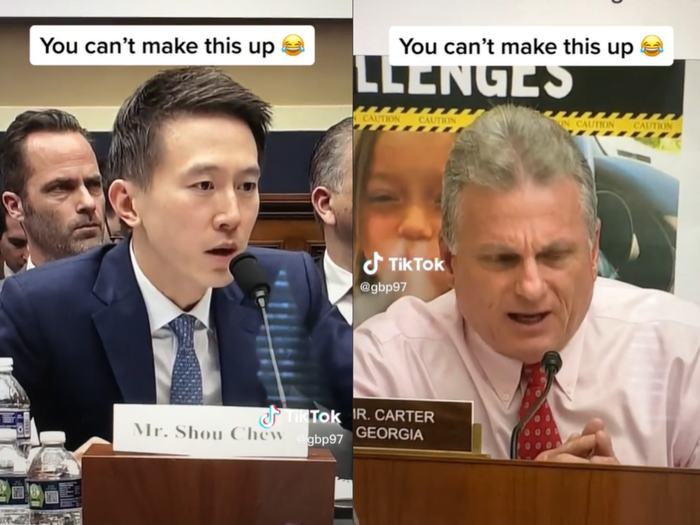
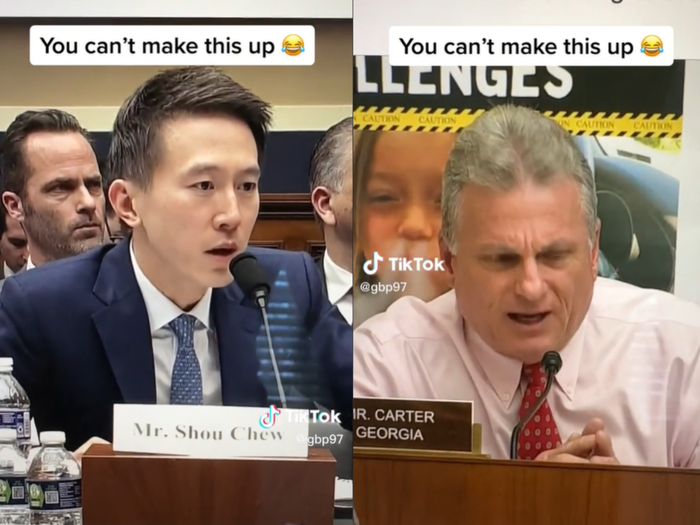
Many have accused Republicans of wanting to ban TikTok for this exact issue: marginalized people now have a platform on which to share their experiences in the world and educate the masses about social justice issues, and this simple act of truth-sharing is dangerous to the interests of the conservative politicians who want to stomp us out of existence. Others have keenly pointed out that the Senators being incredibly obtuse at this week’s TikTok hearing—appearing to get confused about how Wi-Fi works or how face filters work, as discussed in the Insider article whose header image I stole above—were actually using weaponized incompetence. In their mind, this entire hearing was an intentionally-crafted distraction from the fact that if a company wants our data, they can get it pretty easily, and the only reason to implicate TikTok specifically is that a) Meta is paying them to and b) the U.S. government can’t surveil our data as easily as, say, Meta’s and Snapchat’s.
It’s clear to see why people are making these connections: Republicans win elections thanks to a combination of voter suppression and Facebook’s willingness to turn over user data to Cambridge Analytica, while Democrats win elections when Millennials & Zoomers use social media to mobilize their peers. There’s also the fact that Meta (Facebook, Instagram) hired a right-wing consulting firm to specifically spread news articles to sow distrust in TikTok as part of a strategic move to bring down their biggest competitor. According to Open Secrets, Meta has also made contributions to both Democratic and Republican political campaigns, plus $20 million in lobbying efforts. Even AOC herself jumped on the clock app for the first time to share some “inside baseball”: normally, to help make informed decisions on legislation regarding national security, the FBI provides Congress with a classified briefing of the issue. For the proposed TikTok ban, the FBI provided no such document, which throws into question whether the security risks are there at all, as well as Congress’ motivations for rushing through such a wide-reaching bill.
Anti-Asian racism is worth bringing up here, too. Americans are largely misinformed about—well, pretty much everything about Asia, really—but certainly about the ownership of TikTok as a company. As TikTok’s CEO pointed out at the hearing, TikTok is a private company with 3 of their 5 board members being American. But since this is Clown World and our heads have been filled with anti-Chinese propaganda since our time in the womb, all you have to say is “TikTok is owned by Chinese company ByteDance” and most Americans will at least hear out what you have to say, regardless of whether your “concerns” are even true.
Ah, but you see, this is all about national security. At least, that’s the proxy issue they’re using to justify eradicating the only reason why most young people know about abortifacients. Certainly, no U.S. government employee should be using social media apps on their work devices; I hope that this is a fair enough concession to make to those concerned about foreign intelligences acquiring government secrets. At the same time, national security is demonstrably not a TikTok-specific issue. An independent analysis by the Internet Governance Project at the Georgia Institute of Technology points out that TikTok is “a commercially-motivated enterprise, not a tool of the Chinese state” and that “the data collected by TikTok can only be of espionage value if it comes from users who are intimately connected to national security functions and use the app in ways that expose sensitive information”. While social media apps in general have privacy concerns that I would love to be curtailed, the singling out of TikTok is suspicious at best and conspiratorial at worst.
The paper’s executive summary is worth reading in full, but I’ll share what the authors determined to be the biggest costs of implementing a TikTok ban:
Banning TikTok would harm the 90 million + Americans who use the app. It would deprive them of free expression rights, and destroy their equity in their creations and followers.Banning TikTok would expropriate the investors who have provided capital to the company, and eliminate thousands of US jobs.Banning TikTok would weaken competition in the social media/advertising industry.China could retaliate against American businesses in China.Banning TikTok would encourage other countries to enact techno-nationalist and data protectionist policies, which would have negative effects primarily on US-based social media firms.
So even from a capitalist/business perspective, banning TikTok makes no sense; unless of course, the only money you’re interested in are checks written out to you by Mark Zuckerberg, rather than the money in the pockets of everyday Americans.
Here’s my analysis: The only reasons to ban TikTok are because a) Meta and other American firms told them to, b) we need to keep stoking fear that “China bad”, and c) our politicians think the above items are good, actually.
So the question becomes this: will they actually do it? Will they actually go through with a TikTok ban just to screw over the American consumer? Some very smart people have said “no, of course not, this is all a performance and/or distraction”. Actually banning TikTok would hurt American business interests in the long run, meanwhile these fear-mongering hearings are, for now, enough for what American politicians want to do: (1) reinforce anti-Asian sentiment in the average American and (2) scare TikTokers into using Meta products.
I would say I’m mostly in agreement about this. Given just how much America is leaning into fascist ideology lately, with book bans across the country and extreme bans on DEI education in Florida, I wouldn’t take it completely off the table. But if I’m going with my gut—a gut that you absolutely should not trust to have the final word about global geopolitics—I’d say this whole issue will either evaporate, or we’ll get some measly performative ban, on the order of “government employees not being allowed to have TikTok installed on their work phones”, something that doesn’t affect the average American consumer but also doesn’t concede that China isn’t a political/economic threat.
Not banning TikTok, or failing to make some sort of substantial move that affirms the idea that “we should hate China/the Chinese”, would be a sign of weakness to today’s conservatives. And if there’s one thing we’ve learned from the past few years, it’s that we have more of a political theater than we do a functioning government. Power, loyalty, money, and increasing voter turnout through culture war nonsense all matter more to today’s politicians than serving the American people: if America really does ban TikTok, it will simply be another of many demonstrations of that reality.
Currently Reading
- I wrote last week about the recent anti-trans bills, and I’m increasingly seeing more breakdowns about the massive 2600-page email leak that amplified their popularity. Here’s another which demonstrates the anti-trans movements Christian Nationalist roots.
- Hampshire College, a school in Western MA, recently started offering admission (with matched tuition) to students at a peer institution in Florida. In response to Florida’s attacks on progressive education, the humble Amherst liberal arts institution is offering students at New College of Florida a streamlined transfer progress so that they can learn, you know, factual information about our country’s history. Epic! More of this, please!
- I have long been a fan of “Cornbread Tube”, the mostly-Black collective of leftist YouTubers who represent the second (more diverse) wave of “Breadtube”. Lil’ Bill just dropped an unofficially-official reading list for those who want to get started with their own anti-racist, anti-colonial education. (See also these scaffolded anti-racist resources for those already working at an intermediate level.)
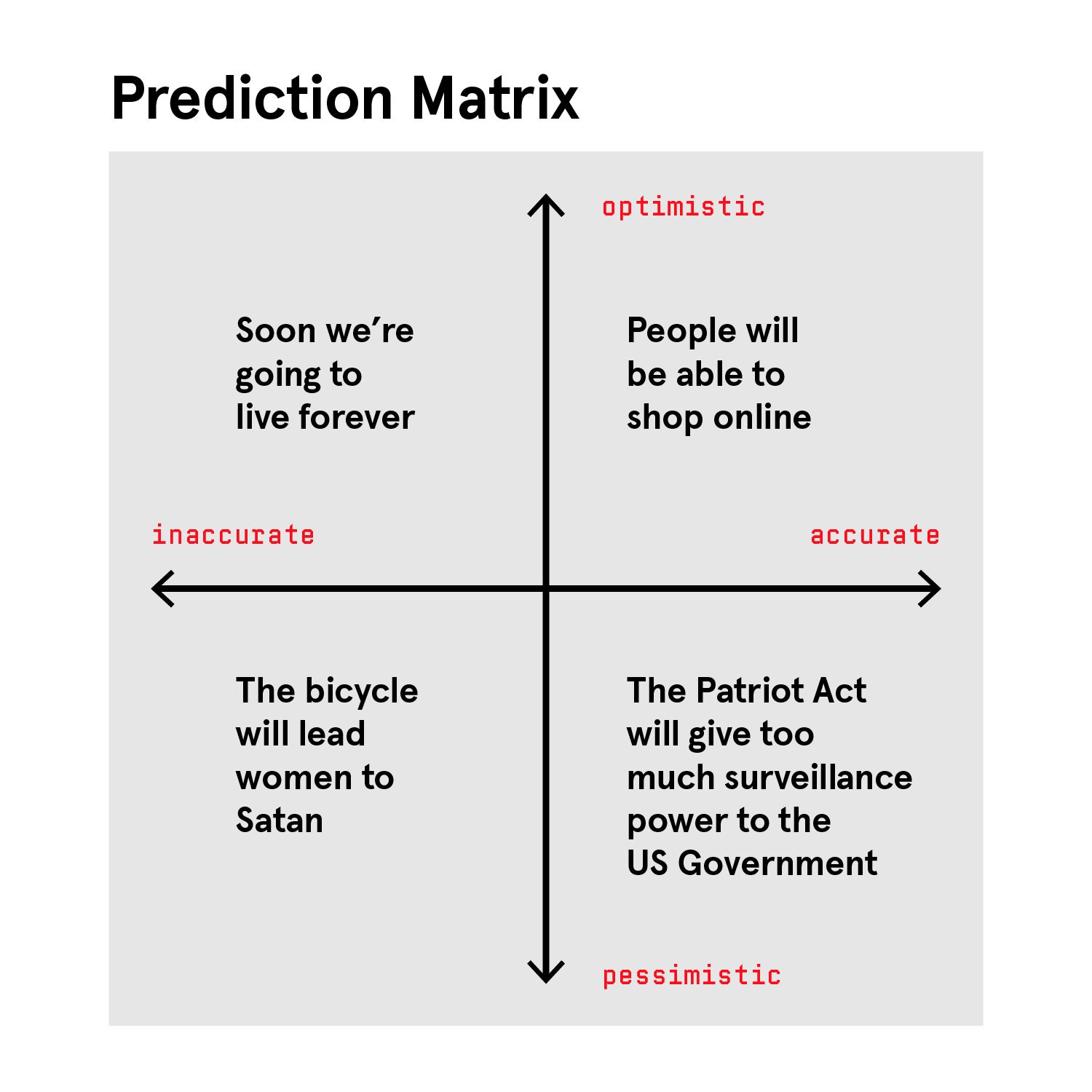
- Rose Eveleth is one of my biggest inspirations as a creator, and her futurology work is always superb. Check out her latest Wired article, which includes this killer graphic about predictions of the future:
Watch History
- A philosophical breakdown of control in society, and why even oppressors are miserable under our current political system.
- A straightforward breakdown of why average product quality is declining. (Hint: plastics are a part of it!)
- A fantastic video about the original shitty Metaverse (and preview of next week’s newsletter topic…)
Bops, Vibes, & Jams
- I’m incredibly excited about Kaelin Ellis as an up-and-coming producer, and have been obsessed with “THE FUNK WILL PREVAIL”, which you must listen to if you enjoy funk and/or hip-hop.
- I’m also becoming obsessed with Shygirl, whose new song with Tinashe has been stuck in my head since I heard it.
- For something more intense, Alice Longyu Gao’s new EP “Let’s Hope The Heteros Fail, Learn and Retire” is full of bangers, especially “Come 2 Brazil”.
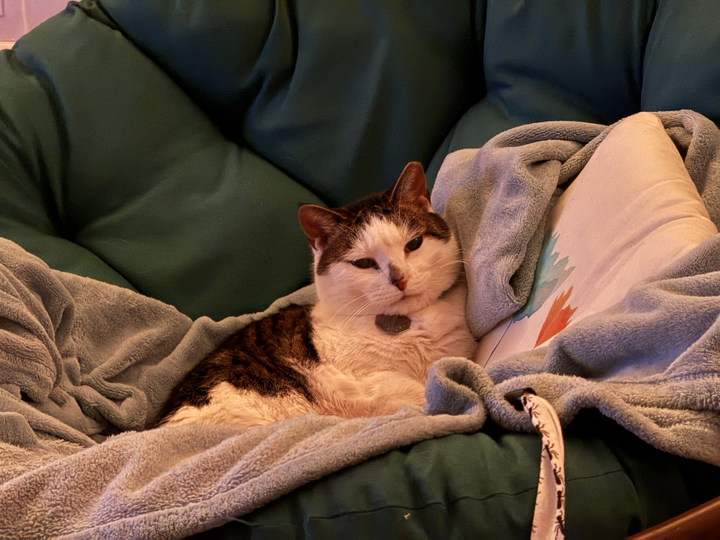
And now, your weekly Koko.

That’s all for now! See you next week with more sweet, sweet content.
In solidarity,
-Anna
Thank you for reading That Anna Marie Newsletter. Other than subscribing, the best way to support my work is to share it!