So About That Black Plastic Study...
On why not all scientific papers are created equal.
Real quick up top: I’m now giving 50% of my Substack income to help a family survive in Gaza. In December 2024, we sent $80! Thank you so much to my paid subscribers! If you want to help too, consider upgrading to the paid tier; if you do, you’ll get four hot takes per month instead of two!
This week, we need to talk about the study that made us all panic about our black kitchen plastic. But first…
Dr. Anna Marie’s Three Questions To Ask When You Hear The Phrase “A Study Said So” In A News Headline Or Viral Video…
- What type of study?
- What type of journal?
- What are its limitations? (E.g. sample size, methodology, statistical significance, conflicts of interest, etc.)
It’s unfortunately pretty rare that a news story about plastic hits the mainstream. It’s even more unfortunate that when one does, it usually leads to mass panic. We’ve seen this before with plastic straws, period products, and every time a new finding comes out about microplastics. (Side note: here’s another write-up I did about plastic waste!)
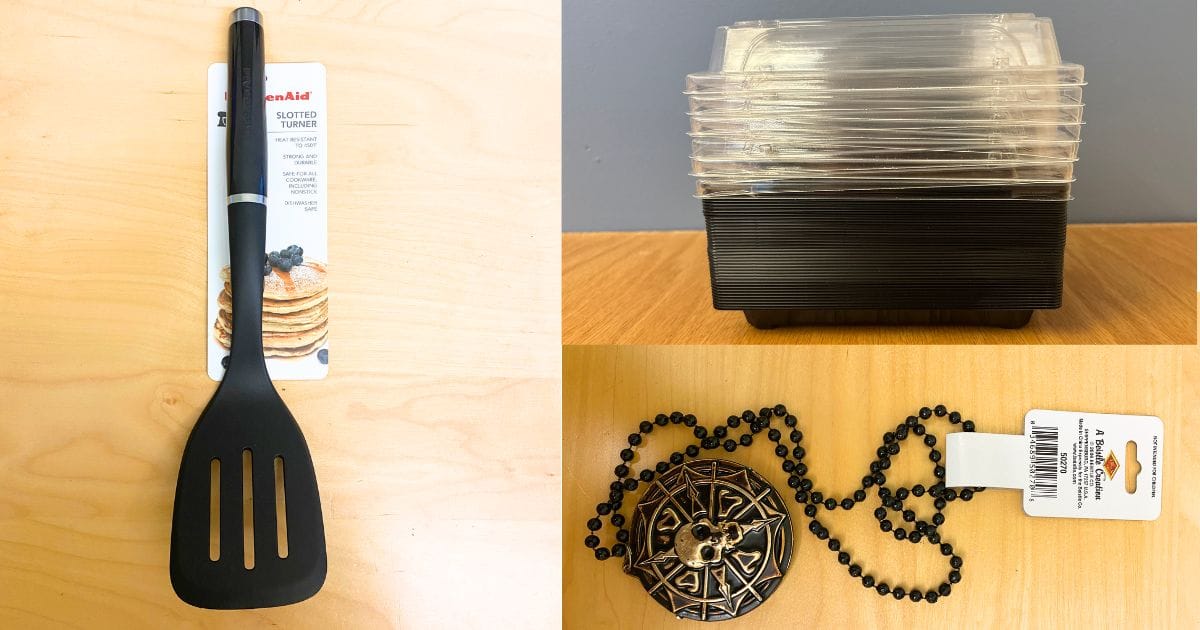
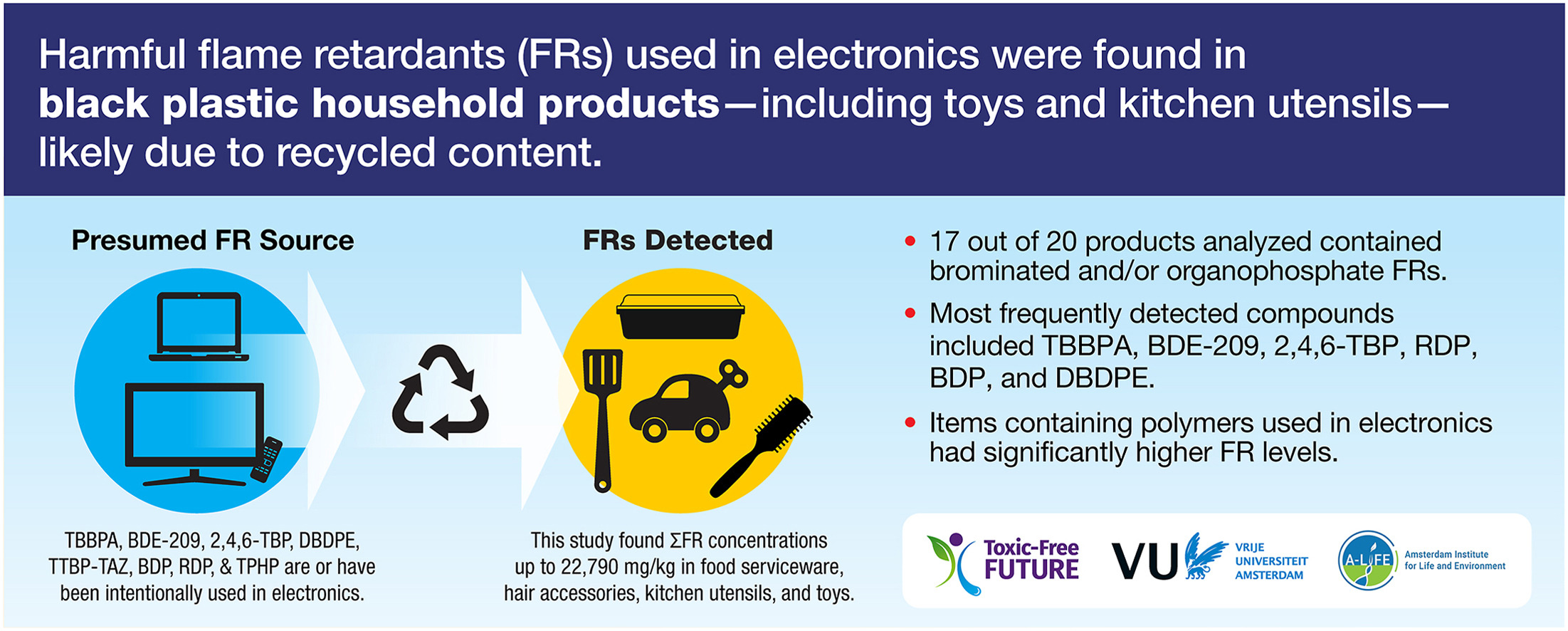
You probably did hear about this one: a study in the journal Chemosphere found that black plastic items such as kitchen utensils (spatulas, serving spoons, other food service ware), and kid’s toys contain high amounts of brominated flame retardants (BFRs) and organophosphate flame retardants (OPFRs), which are widely known as hormone-disrupting and carcinogenic (cancer-causing). Here are some links to some news write-ups from traditional news outlets (1 2 3) and one sustainability-focused publication (4). Essentially, many of these plastics contain recycled material from e-waste—think the plastic enclosures for televisions, remotes, phones, etc.—which contain flame retardants to make those electronics safer. While recycling plastic is an important part of a sustainable, circular economy, it can be incredibly dangerous for plastics that contain non-food safe chemicals to later end up in materials that directly touch food. Our recycling infrastructure needs a massive overhaul to address this problem by carefully tracking what types of products end up being recycled into what, and the everyday consumer should be wary of black kitchen plastics since they are likely to leach these dangerous chemicals into our food.
This story spread widely for a few reasons, but perhaps most importantly, it came with a pretty simple directive: “get rid of this specific type of plastic and replace it with wood or metal”. This easy-to-execute order stands in stark contrast to microplastics, whose stories usually end with “they’re already in everything, including us, so I guess there’s nothing we can do, except end capitalism maybe?” This leaves no room for any material action, other than from snake oil salesmen who will try to sell you a pill that magically detoxifies you from microplastics (spoiler alert: no such technology exists).
Anyway, once the journal article was picked up by news sources, then by content creators from across the political spectrum, people started throwing away their black plastic kitchen utensils in droves. As someone who generally advocates for finding alternatives to plastic whenever possible, I personally believe this is a good thing: the general public has no concept of the hazards that plastics contain. As an expert who teaches a class on this very subject, one thing I’m always sure to highlight to my students is that “plastic” is not just one thing: not only are there many types of plastic (PET, HDPE, LDPE, PVC, etc.) but even within each of these categories, every product made with that material is wildly different. Despite sharing a base polymer, a PVC pipe and a PVC music record have totally different compositions: the pipe will contain heat stabilizers, plasticizers, flame retardants, antioxidants, and fillers to make it rigid, while the record will contain anti-static agents, pigments, lubricants, and also stabilizers and plasticizers, but in completely different amounts to the pipe since the pipe is made with extrusion and the record was made with compression molding. Similarly, two plastic bottles from different manufacturers will have totally different amounts of UV stabilizers, slip agents, oxygen scavengers, and more. In other words, even if you know what the base polymer is for any given plastic product, you have literally no idea what other kinds of cancer-causing chemicals might be in there. The fact that even the non-specific way we talk about plastics (e.g. “black plastic”) is not nearly as descriptive enough to even start to have a conversation about the scale of the harms associated with these materials!
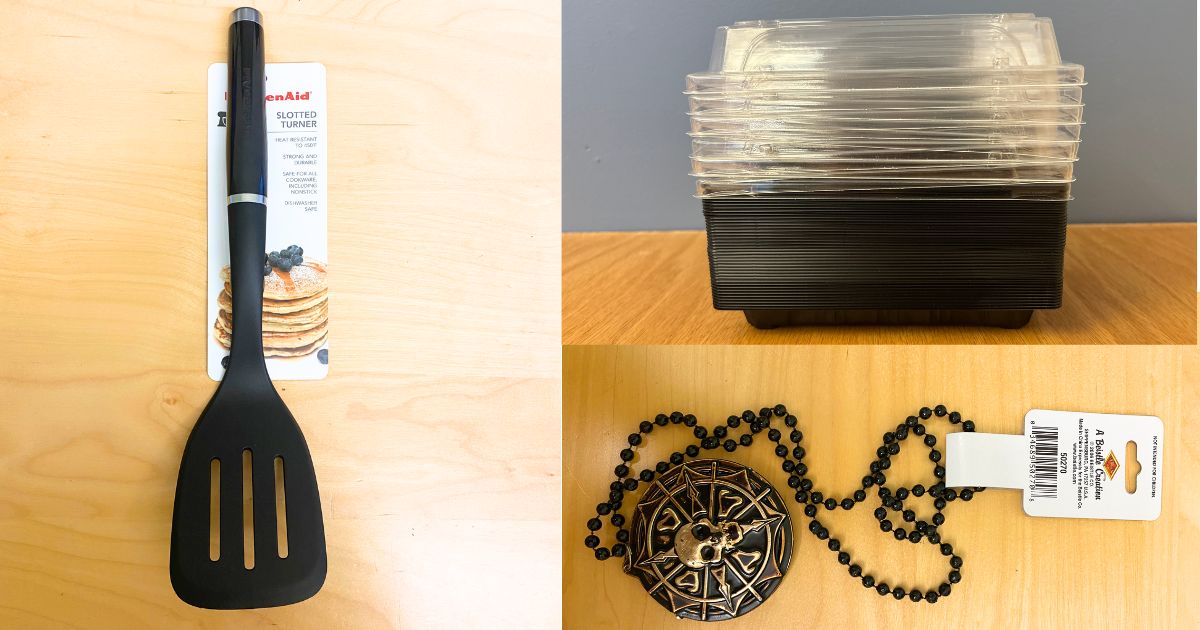
However, none of this is why I’m writing this piece. The most interesting part of this story, to me, is what happened next.
The Chemosphere study looked at many flame retardant compounds found in black plastic, including TBBPA, BDE-209, RDP, BDP, and DBDPE. In one calculation, the daily intake of BDE-209 (decabromodiphenyl ether) was estimated to be 34,700 ng/day. In the original article, the authors used the reference dose—the U.S. EPA's maximum acceptable oral dose of a toxic substance—of 7,000 ng/kg body weight/day. However, in a multiplication error, they stated that the maximum allowable dose of BDE-209 for a 60 kg (132 lb) adult would be 42,000 ng/day, instead of the correct value of 420,000 ng/day (7000*60=420,000). Since the article warned that the estimated daily intake of BDE-209 was 34,700 ng/day was close to the incorrect maximum acceptable intake of 42,000, but far from 420,000, on December 15th, the authors issued a correction clarifying the error but stating that it “does not affect the overall conclusion of the paper”.
ARE YOU ENRAGED YET?? Apparently, you should be, because this one (admittedly silly) math error about one of the many chemicals addressed in the paper was also taken up by both mainstream news and content creators. Despite the fact that BDE-209 was only one of the several chemicals studied, and the fact that 34,700 ng/day is still an unsafe dose for, as an example, a 5 kg (11 lb) baby, this error was used by some to imply that the study was “blown out of proportion” (as well-respected science communicator Hank Green stated) or should be rejected entirely.
“How a simple math error sparked a panic about black plastic kitchen utensils” headlines the article shared by Green. “Recent panic over black plastic started with a math error” reads another in Popular Science. “Multiplication and mass fear” warns Mashable. Each of these articles makes sure to point out that the study was carried out by Toxic-Free Future, an environmental advocacy group, perhaps to imply a level of bias towards a certain conclusion. They also use the word “panic”, which we culturally view as “bad events where the public is misled into doing something stupid”.
We should be surgical about this. Yes, it was bad that the study made a math error. Yes, perhaps the study was biased because of who it came from. But this doesn’t necessarily mean we should throw the baby out with the bathwater: the plastic you use in your kitchen is still dangerous, especially for the many other chemicals that the study looked at, and you should probably seek alternatives. Interestingly, despite most of these newer articles clarifying somewhere that “BDE-209 is still bad for you” and “you might want to still be wary of black plastic”, this hasn’t stopped people, especially content creators, from casting doubt on the study as a whole, and even scientific journals in general.