Rejecting a Homogenous Internet
On social media e-commerce, power consolidation, and dreaming better futures.
Note: I’ve received word from the platform owners that you can now pay for these newsletters with more options than just a credit card! If that’s what’s been stopping you from subscribing to the paid version, feel free to learn more about these new payment options. Thanks!
I’ve been off TikTok for a few months now, and I don’t regret it at all. Despite my largest following being on that app (~92,000 people), over time I’ve become far more proud of my writing here than my video-based lectures. Besides, TikTok is a platform that promotes misinformation/radicalization, encourages reductionist takes on culture, suppresses content from marginalized voices, and erodes human attention spans. I’m incredibly grateful that I’ve been able to build a following on the app, especially with the style of long-form content that I do, but I am personally sick of the content suppression I experience, and I don’t want to contribute to the growth of the attention economy. (I’ve also been busy making lectures for my summer class, which involved spending hours scripting/filming/editing videos during work hours, so I didn’t want to spend all my non-work hours doing the same.)
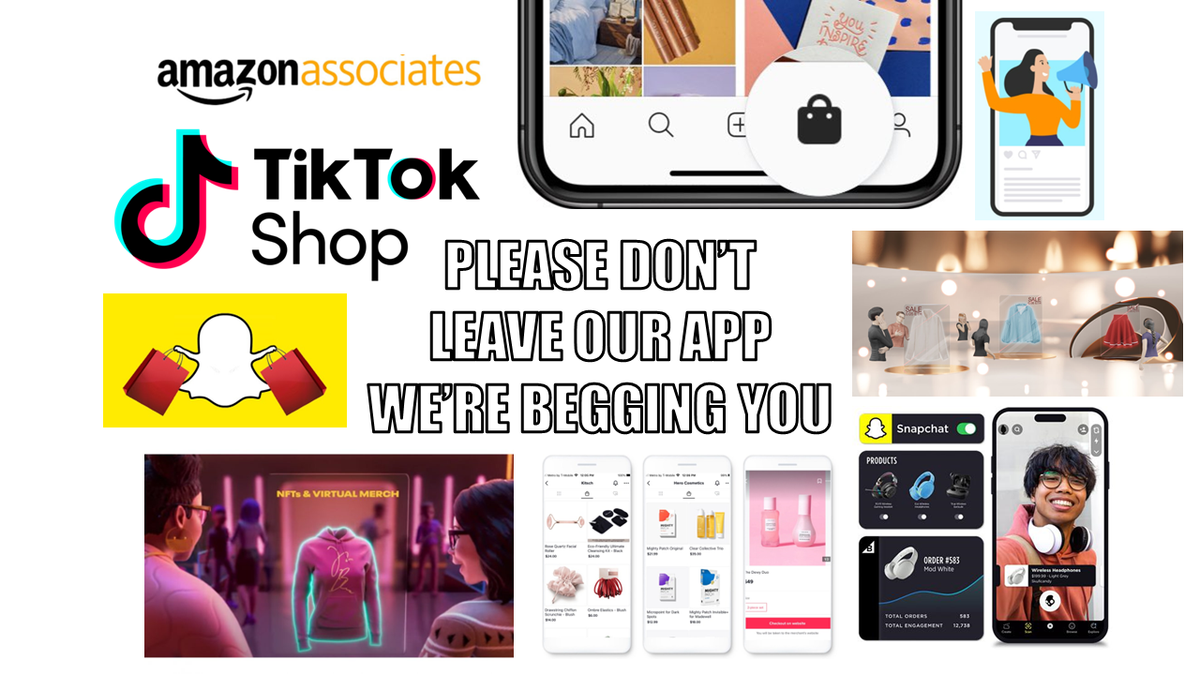
Never have I been more proud of “quiet quitting” video creation than this past week, when I first heard of TikTok Shop, a new e-commerce platform that takes place entirely within the TikTok app. Creators with only a few thousand followers are able to make short videos promoting links to cheap consumer goods, and if their followers buy the product using their link, creators get a small commission. This isn’t drastically different from affiliate marketing that we’ve seen with, for example, Amazon links in YouTube video descriptions or Instagram/Snapchat’s Shop tabs. However, it represents something greater about the state of capitalism and the modern Internet that I think is worth discussing.
TikTok Shop is currently unavoidable on the app. Unlike Instagram and Snapchat’s versions, TikTok Shop is not relegated to a separate part of the app that you don’t have to click on if you don’t want to; every creator who has set up a TikTok Shop now has a list of their recommended products right on their profile page. And perhaps more importantly, TikTok Shop ads have completely taken over the app, to the point where every other video you see on the For You Page is one where a random creator is slinging a random product on the service. I don’t blame influencers for this—they’re simply taking advantage of a new source of income, and they need to eat—but the fact that this e-commerce functionality is impossible for most users to avoid is utterly dystopian.
The divide between normal content and advertisement was shattered long ago. First came the rise of product placement in media in the early 20th century. Then came the Reagan administration’s lifting of restrictions on how we advertise to children, hence products like Transformers and Power Rangers being turned into 30-minute toy commercials. Then came influencer marketing, where random creators (or I guess non-humans now) could be turned into shills for earphones and VPNs for a fraction of the cost of professional TV actors. And now, the integration of e-commerce is seamless; you scroll through social media, you see your favorite media personality showing off a skin cream, and you buy it instantly without even having to the leave the app.
It’s all getting me to ask: how long will this last? How far will we go in the unethical practice of advertising to children, who can’t discern between normal media and content engineered to sell them products? At what point will we all tip over into consuming advertisements 24 hours a day?