How to Teach About Sustainability in 2025 America
On long-term thinking and supporting students.
I can see it now: it’s mid-October, the air is cooler, and the sun is now setting earlier. I’m with the 20 students in my evening class, Green Chemical Engineering, wrapping up another lecture in my Green Chemical Engineering class. The discussion is revolving around the environmental impact of a certain process—maybe the production of ibuprofen, or a certain type of plastic—and all of the ways the process could become greener. Ideas are springing out as though anything were possible: What if the process used renewable energy instead of fossil fuels? What if the product was made from biomass instead of other raw materials? What if a safer solvent was used instead of this toxic one? What if, what if, what if?
Until a student in the back of the class raises their hand. Instead of presenting a new idea, they abruptly ground the conversation: How would any of this be possible given…you know…the state of things? Like, who would actually enforce this?
We immediately understand what they’re getting at. And it’s not an unreasonable question. The current “administration” (as many in academia have taken to calling it) would neither encourage nor actively support any sort of transition to renewables or banning of certain dangerous chemicals. Grants containing words like “systemic” and “indigenous” are being denied funding. With a complete Republican control of the federal government and corporations acting with impunity to build new fossil fuel-guzzling plants, there’s a felt sense among many that all of those “we will cut X% emissions by the year 2030”-type commitments made years ago are now nothing more than wishful thinking. The other students move from being engaged to looking down at their desks, processing all of this and more, before looking to me, their instructor, for an answer.
What do I say? That they shouldn’t worry, that everything will be okay? That the terrors they’ve experienced first-hand every day all year so far are only temporary? That they should just Vote Hard in 2028 so they can implement their creative ideas next decade?
The fact is, I don’t have an answer. I don’t know when these ideas will become popular or even feasible. Maybe it won’t get easier for a long time. Maybe, the way things are going, the chemical industry will never change, and this is just…it.
Here’s the thing, though: teaching is not about giving certain answers about everything. That’s why we assign open-ended projects. That’s why we promote self-directed learning by creating learning environments where students can learn autonomy and critical thinking. I tell my students all the time, even outside of contexts like the one described above, that the point of getting an education is not so you can solve solved problems (e.g., the ones I assign on homework sets and quizzes), it’s so that you can gain the skills you need to solve all the unsolved problems out there in the world.
By extension, the role of the teacher is not to tell students that everything is going to be easy, that the world is simply an optimization equation that they need to plug all the right variables into. Teaching, especially in 2025, is about leadership through uncertainty. It’s about giving students all the tools they need to approach a problem, which at this juncture means providing instruction on the political reality we’re facing.
We can no longer talk about switching to renewables or ditching toxic solvents in the abstract. The barriers to sustainability are not just technical, they’re political: there is a lack of political will from the government to enforce a transition away from fossil-based carbon and towards renewables. There is an entire economic infrastructure—from investment companies to banks to individual wealthy ghouls—that maintain the status quo. There is propaganda funded by Big Oil which is now being embraced by the federal government. And of course, there’s the simple reality that the chemical industry is only polluting this much so that we can maintain our consumerist lifestyle; to quote Alyssa Battistoni in Lux, “Oil is valuable, so fossil fuel companies won’t stop producing it unless they’re made to; oil is also necessary for life as presently organized, so we can’t just dump it immediately.”
Ignoring this reality would be irresponsible. Us teachers have to face the real problems head-on to prepare our students for them. That’s what I’ve always done in my Green Chemical Engineering class: braid the technical with the sociopolitical. I teach an entire module on environmental justice, using the Movement Generation Just Transition playbook, to coincide with a discussion on transitioning the chemical industry away from fossil fuels. I open up discussion about the exploitation of the Congo and the movements attempting to stop it. And most importantly, I discuss the various environmental wins from working people around the world, especially from unions.
At the start of every semester, I ask my students one simple question: “Show of hands, how many of you feel hopeful about the future?” A few always raise their hands, sometimes even most of the students in the class do. I make sure to jot down how many raise their hands, so that when I ask the same question on the last day of class, I can see how many more hands go up. So far, I always get more hands at the end of the semester than at the beginning, which is how I know I’m saving lives. Teachers may not be able to say, “these actions will definitely work!” but we should never, under any circumstances, let our students leave our classrooms with less hope than they started with.
Action Items
(1) You can now get the updated COVID booster through pharmacies like CVS and Walgreens! You might not find them in your state, though; Massachusetts doesn’t have it yet, but I’ve heard of people successfully getting appointments in New Hampshire and Connecticut. You’ll also have to tell the booking site that you’re high risk. I say do what you need to do to keep yourself and your community safe!
(2) Coincidentally, my local chapter of Science for the People is offering teaching workshops this month! Register here.
We’re happy to announce Science Teaching Group (STG)'s first online workshop this fall—designed for SftP-affiliated science educators* who are interested in bringing radical perspectives into their classrooms and workplaces. This workshop will cover: history of radical science teaching and relevant philosophy concepts, pedagogical practices and examples of materials, and political economy of science including workplace organizing of science teachers and teaching in community. The workshop will be heavily discussion-based, with opportunities to share ideas, and consists of about 6 hours of synchronous meeting time spread across 3 weeks, with meetings on the weekends. We encourage you to attend all three sessions to get the most out of this workshop.
*Science educators are broadly defined, including science teachers (K-12, undergraduate, graduate levels), those engaged in outreach and informal education, museum educators, lab research mentors, and anyone else who sees education as an important part of their scientific and radical political practice. It also includes students working as teaching assistants, engaged in informal or peer mentorship, or interested in becoming science educators.
Currently Reading
- Speaking of a new semester, this brilliant essay from a Palestinian scholar.
- Another message from a teacher to students, this time about AI.
- An essay and corresponding research paper about asexual people’s experience of gender. (Related: my piece on asexuality as the next big political target.)
- Proposed methods to fracture conservative coalitions. (Related: my piece about “MAGA Regret”.)
Watch History
- A brief, clever video about YouTube alternatives given the disastrous AI age verification rollout.
- A stunning indie animation pilot from one of my favorite creators.
- A new piece on conservative’s war on empathy from an OG.
Bops, Vibes, & Jams
- I regret to inform you that, after all that controversy, the new Sabrina Carpenter album is MID!!! The country-inspired “Go Go Juice” and slow jam “Sugar Talking” are great tracks, but the rest I just could not warm up to, even after multiple listens. Where her previous bangers (“Espresso” et al.) were good songs that occasionally contained jokes, the vast majority the tracks on Man’s Best Friend are built entirely around jokes (and not very good ones), making them feel more like SNL skits than pop songs. 2/5.
This Meme
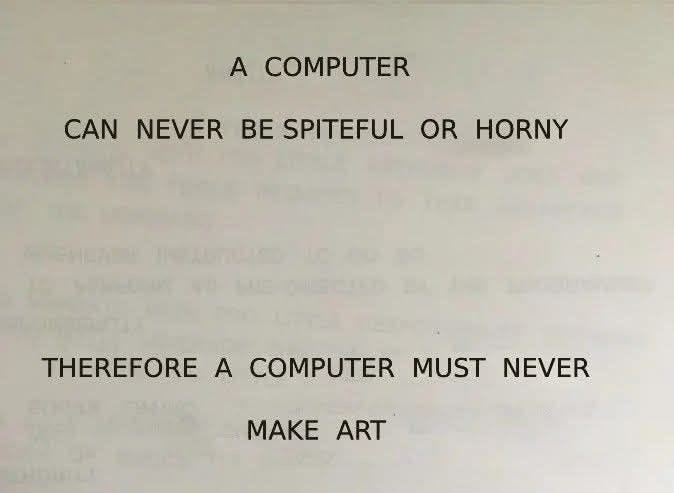
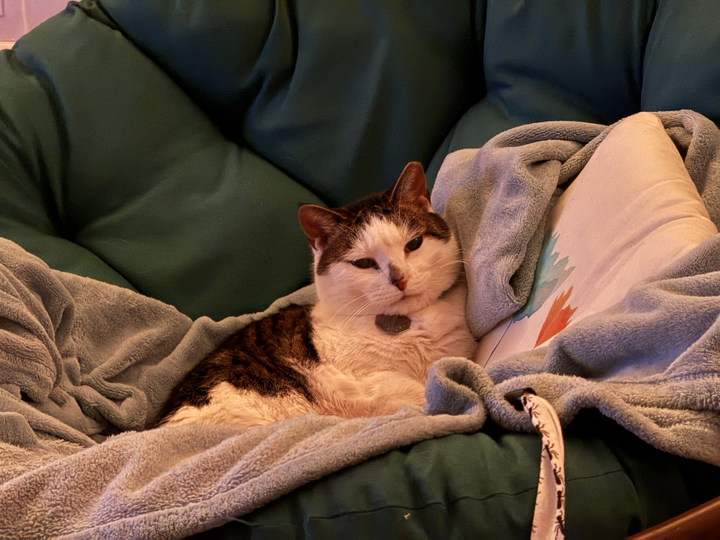
And now, your weekly Koko.
That’s all for now! See you next week with more sweet, sweet content.
In solidarity,
-Anna